
In Modern Evaluation, The Hegemony Of Artificial Intelligence Scoring

So how do we choose who is to be given a loan, who resumes to pass an exam or which job applicant gets the interview? Previously, these decisions were based entirely on human assessment for decades. Human evaluators possess empathy and contextual understanding, yet they are also susceptible to exhaustion, subjective bias, and cognitive limitations. In the last few years, artificial intelligence scoring has quietly changed how we use human data to evaluate people — ranging from creditworthiness to job applications.
But this transition is not only about speed. This is about transforming the frictious and almost incomprehensible torrents of unstructured data into standardized, actionable scores to ensure organizations can make accurate decisions that are fair and efficient across large samples. Automated systems are altering the evaluation dynamic for industries — be it grading standardized tests, assessing financial risks or ranking marketing leads.
What is Artificial Intelligence Scoring?
But, artificial intelligence scoring is mainly about making use of many machine learning algorithms to analyze the input data and score it by giving a numerical value or grade based on predefined criteria. The latest machine learning systems directly learn from patterns of what historically tended to happen, as opposed to traditional rule-based software that process human-written “if-then” statements with strict conditionings.
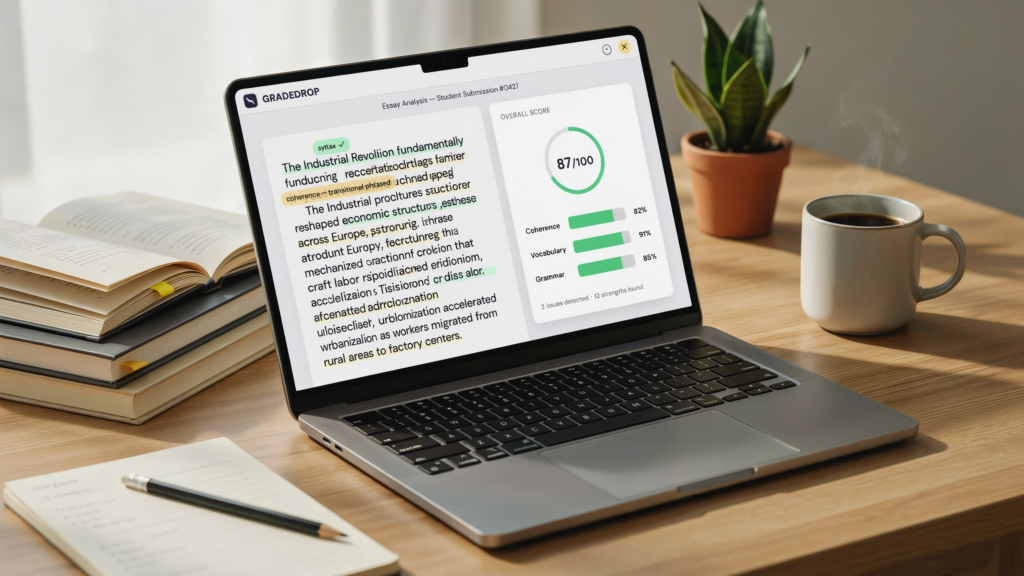
To score a written essay, for instance, an algorithm does not simply scan for misspelled words. It analyzes syntax, coherence, argumentation structure, and formatting complexity. By churning through thousands of essays that were already graded, the system learns what an “A-grade” essay looks like. After training, it can assess fresh essays in less than a second, with human-level accuracy and without the irremediable arbitrariness introduced by overworked human raters.
The Fundamental Benefits of Algorithmic Evaluation
Artificial intelligence scoring is being adopted in many sectors because it is able to process complex sets of data exponentially faster than a human panel ever could. Besides speed, these systems come with other important benefits:
- Neutrality and Consistency:An algorithm applies the same standard to every input. It feels no fatigue at 4:00 PM on a Friday, nor allows foul mood to cloud its thinking.
- Unique Pattern Recognition: Machine learning models can recognize the advanced data correlation that escapes human eyes. For example, in predictive modeling, an algorithm might discover that a certain pattern of activity are indicative of brand-dedicated customers.
- Scaling Up/Down in Real-Time: Organizations no longer need to hire hundreds of temporary staff members for the sole purpose of processing seasonal applications or test papers every few months; they can now run thousands of scores at once and the cost implications do not drastically change.
size=3 width=1042 style=’width:521.0pt’ align=center>
Reimagining Education and Academic Testing
Automated grading systems represent one of the more overt frontiers for education. In recent years, many traditional standardized tests such as language proficiency exams or university entrance test have migrated to machine learning evaluation models. Often, it can relieve teachers of the mundane task of standardized scoring and also allow them to direct their efforts away from grading and toward personalized mentoring in the classroom as they implement artificial intelligence.
Automated Essay Grading And Language Assessments
Marking open-ended essays has proven to be a long-standing sticking point in the testing of widely accessible avenues for assessment, however. Therefore, given the state-of-the-art Natural Language Processing (NLP) models today, which can analyze open-ended text with incredible nuance! These systems evaluate:
Coherence and Cohesion: This is how the sentences and paragraphs join up on a logical level.
These are: Lexical Resource ✗ 3
Syntactical Diversity : How complex and grammatically accurate the sentence structures are.
This is not replacing teachers but aiding them. It delivers raw, objective baseline grades instantly freeing up teachers for constructive qualitative feedback.
Adaptive Learning and Standardized Testing
With standardized tests today, scoring is a dynamic process. Adaptive testing engines work by monitoring your previous answers and using that real-time score to adjust the question difficulty of each subsequent question you will see. When a student correctly answers a medium-difficulty question, it fires ahead with a harder question and slowly moves up the best possible end score for that student. This more fluid method provides a much better assessment of real student ability over a smaller testing time frame.
Financial Services and Credit Risk Redefined.
Financial services was one of the earliest industries to adopt automated decision-making in use cases. Banks and lenders have always relied on legacy credit scoring models using limited credit card history and outstanding loans to make decisions. The adoption of artificial intelligence scoring in banking is radically changing how lenders assess the financial risk today.
Machine learning models are capable of constructing extremely accurate credit risk profiles by evaluating thousands of parameters simultaneously. This has special significance for “thin-file” borrowers—those that may have limited credit card history but otherwise practice good financial habits. This is where the artificial intelligence scoring, which considers all of these monthly rent and utility payments as well as even cash-flow patterns rather than traditional metrics, can benefit these under-represented groups.
Incorporating Alternative Data Sources

Conventional bureaus only miss the biggest picture of a consumer behavior. Recent algorithmic engines tackle this issue by analyzing non-traditional data points, commonly known as alternative data. These include:
- Utility and Telecom Payments: Consistently paid phone and utility bills on-time.
- Ownership: Property registries and company ownership.
Cash Flow Dynamics: This features daily transaction patterns in checking accounts, examining the ratio of income to spending.
When these diverse data streams are fed into predictive models, financial institutions can slightly increase the number of customers they serve without hurting their overall default rates.
Promoting Global Financial Inclusion
Millions of people do not have access to banking, and even they can NOT get traditional business loans in various developing economies. That is where smart evaluation engines come in. This enables regional fintechs to quickly score and approve micro-loans by assessing mobile wallet transactions and transaction volumes of the small businesses. It helps small merchants grow their businesses in an inclusive way, without the need for a formal bank account, thereby democratizing access to capital.
The Transformation within HR and Talent Acquisition
Similar to how automated risk models have been adopted in finance, human resource departments are leveraging intelligent systems to solve the issue of high-volume recruiting. It is slow and subject to human error when thousands of applicants apply for one job posting. In this case, global enterprises are resorting to artificial intelligence scoring for resume selection and skill matching and cultural fit ranking of candidates.
Modern ATS platforms are way more advanced than just keyword matching. They use natural language processing to comprehend the background of an applicant’s past work, connecting previous successes with the requirements of the opening being filled.
Automated Candidate Screening and Ranking
When a candidate applies, the system parses the resume and matches it against the job description. The algorithm does not sift through data looking for the word-for-word match, but recognizes related terms and synonyms. So, for example, if a job description is looking for “digital outreach experience,” the system knows that managing social media campaigns is one of the reasons it is relevant.
However, the main idea of artificial intelligence scoring in recruiting is not to substitute human HR managers but to filter noise. Using the software to shortlist the 5% of candidates best aligned with job description frees HR professionals up to focus their energies conducting in-depth, high-level interviews.
Eliminating Initial Selection Bottlenecks
For high-volume industries such as retail, hospitality and customer service, time-to-hire is a vital metric. It can take a few days to get a top candidate ready, and if we wait that long we will lose matching talent to competition. The moment applications are submitted, automated screening engines can score and rank hundreds of the applications as best fit for that role, automatically sending follow up screening emails or calendar links for interviews to the top candidates. This keeps applicants engaged, and can help to save form-filling time and the administrative door of hiring teams as well.
Whether the technology frees-up operational bottlenecks or imposes new biases is determined by how organizations configure their artificial intelligence scoring workflows. You must ensure that training data is representative and algorithms are subject to regular audits to ensure outputs are fair, non-discriminatory.
Optimizing Sales and Marketing Pipelines
Time is literally money in the fast-paced world of business-to-business (B2B) sales. So, This leads them to waste countless hours engaging with cold leads which have no intention of purchasing. Artificial intelligence modeling tools help alleviate this bottleneck in sales and marketing by showing precisely what prospects are ready to make a purchase.
Machine learning models that leverage customer data exported from multiple digital channels discover patterns in complex customer behaviours compared to lead scoring which uses simple, static rules (e.g. points to leads if they visit the pricing page). They monitor webinar attendance, whitepaper downloads, email response rates and even social media activity. By scoring companies with this application of artificial intelligence, marketing teams get the highest quality opportunities piped into the sales team’s pipeline.
Predictive Lead Scoring for B2B Institutions
Uneven servicing of all leads, then, is a never hitting calibre in a high-growth business! Predictive lead scoring builds a profile of your best customer by looking at past data on which prospects have converted to sales. It then compares any incoming leads against this profile in real time.
- Signals by Behaviour: Frequency of visiting high intent pages like case studies or product demo requests.
- Firmographic Data: Type of company, industry vertical & annual sales.
- Intent Data: Searches conducted by the company on third-party web pages showing interest in solutions that belong to your category.
It is the difference between a locked sales pipeline and record-breaking quarterly revenue: Understanding how well artificial intelligence scoring helps convert those leads into sales.
Churn Prediction and Customer Retention
The cost of acquiring a new customer is about 5–25 times more than retaining an existing one. Subscription businesses can identify accounts that are “at risk” of cancelling by scoring active customers using product usage, support tickets and billing issues.
When the login count (for a user, with respect to the platform) is decreased by 40% in a month, this system accounts it as high churn probability score. This sets off an automated alert to the customer success team to reach out proactively with specialized assistance or a discount offer before they give up and leave.
Navigating Challenges, Bias, and Transparency
Although it may have commercial and operational benefits, using machine learning poses profound ethical and technical challenges. For one thing, best practices around successful artificial intelligence scoring models require a visibility into how automated decisions are being made.
Addressing the “Black Box” Problem
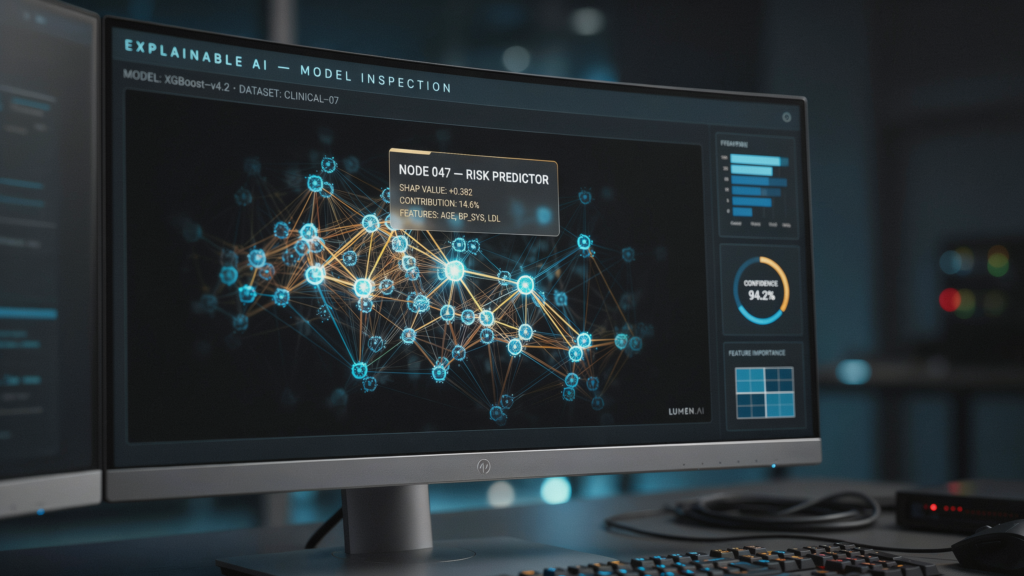
The “black box” problem is one of the biggest concern in modern machine learning. It is very hard to explain the why of a given number when an algorithm churns through thousands of data points to produce a score.
Across the board, transparency is a matter of law for companies in highly regulated industries such as healthcare and lending. If a bank rejects your home loan based on an automated decision, they are required to tell you why under the law. So, modern artificial intelligence scoring strategies need to focus on explaining how the machine-generated results are tracking towards machine learning and other Artificial Intelligence (AI) framework such that every algorithm output produced is accompanied by a simple, human-readable explanation.
Preventing Algorithmic Bias
Algorithmic biasis another important issue. When an algorithm is trained on historical data that contains human bias, it will learn and re-input these same biases.
A recruitment scoring model trained on historical hiring data from a company that had an implicit bias against certain demographic groups for leadership roles would probably discount such profiles. To combat this, data science teams must repeatedly audit training datasets by identifying and removing biased variables and retraining models to ensure equitable perfromance for user subpopulations.
What Lies Ahead: The Future of Algorithmic Evaluation
Increase in computing power and the development of natural language processing, suggest that the future of AI scoring will be more continuous real-time feedback loops as opposed to static through event based processes. Instead of ending up with a single score at the end of quarterly sales cycle or academic semester, individuals and businesses will have access to live dynamically updating assessment metrics that allow them to make adjustments immediately.
This change will create highly adaptive evaluations fully integrated in workflows everyday. In addition, we are now beginning to see the emergence of multi-modal scoring that will allow algorithms to analyze video as well as text or number scores, and voice patterns (for example presentation skills, customer sentiment or pronunciation language) with unprecedented accuracy.
How to maintain basic responsible choices when implementing scoring systems
Cautious and iterative approach is well needed by the businesses, who wants to build its own scoring models. When preparing to create your artificial intelligence scoring frameworks, it is imperative to develop sound data governance criteria. Any prediction instrument is fueled by historical, clean and unbiased information.
Here are the main phases of integration:
Verifying Training Data: Auditing historical datasets for hidden human bias.
Begin with Small Batches: To scale the system, start training your models on datasets with a tight control and verify the output manually.
Adopt Explainable AI (XAI): Drive your software to produce human-readable explanations with each algorithmic score.
Keep a Human-in-the-Loop: Retain a human oversight for edge cases and user appealse.
Keeping the human in the loop also is important. Algorithms need to manage higher volume processing while amazing human experts can handle complex nuances, cultural context, and emotional intelligence; this is where accuracy really comes from! A hybrid approach is needed to stay ahead in artificial intelligence scoring implementation that enables machine learning to enhance human capacity and capability rather than attempting to completely eliminate human oversight.
Conclusion
AI scoring is not just a tool for efficiency — with a solid strategy, it becomes one of the foundations that layer together to create data driven growth. The Future of Assessment for Modern OrganizationsBy creating transparent, ethical, and extremely efficient scoring engines, the future of fairer,faster and more scalable assessments awaits modern organizations far beyond the globe.
Frequently Asked Questions (FAQ)
Q1 — Is AI scoring more accurate than human evaluation?
While consistency and processing time are an area in which we have a huge competitive advantage. It does not experience exhaustion, or human whims. But high creativity or subjective assessments can have a better outcome when you take an AI speed with human context hybrid approach.
Q2: How can bias be avoided in automated scoring systems for businesses?
For example, data science teams need to audit training datasets from time to time by identifying and getting rid of the discriminatory variables. Regular algorithmic audits and training on more diverse, representative data are the most effective protections against bias.
Q3: Which industries get the most benefits from this technology?
The areas that are currently benefiting the most from automated scoring systems today include education (automated grading), finance (credit risk assessment), HR (candidate screening), and sales (predictive lead scoring).