
The New Digital Media: Artificial Intelligence Animated Images
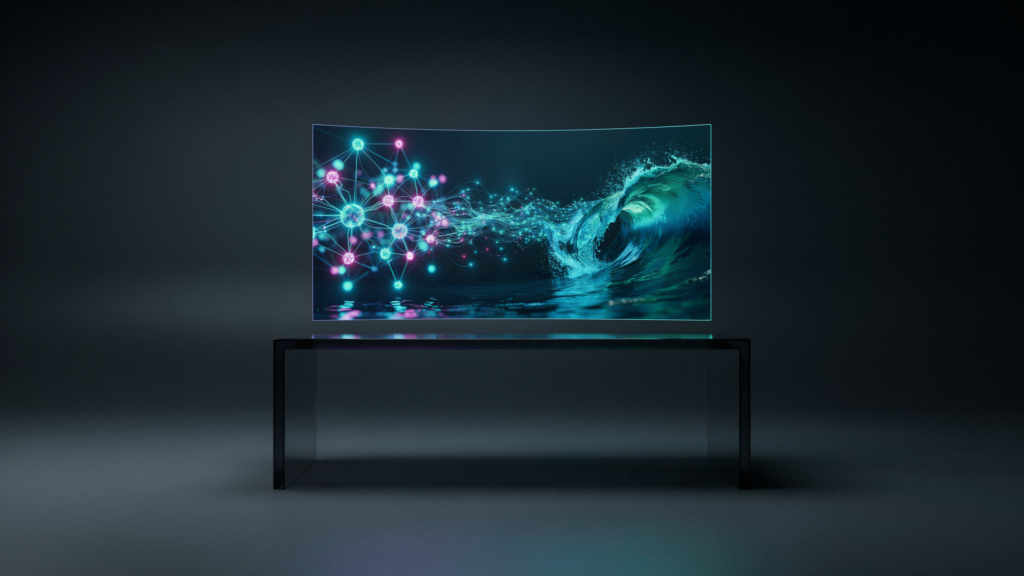
artificial intelligence animated images; We are in the middle of a huge transformation into how we consume visual content. In the past, making a moving sequence would take teams of animators, expensive software and hours of rendering. All it takes, now a days, is a short text prompt to create an animated scene in less than 60 seconds. artificial intelligence animated images, the trend redefining storytelling, marketing and digital art — all at once as its creative revolution unfolds. With the combination of generative AI and high-end motion graphics, creators can now masterfully animate static ideas with an unimaginable ease.
If you are a professional graphic designer or a content creator seeking greater engagement or simply someone casually following the most recent developments in technology, this medium is worth understanding. It’s not just about a pretty static picture: now — it’s about exploring life, rhythm, and story in digital format. Now, let us take a deep dive into how this technology actually works, why it matters and how it is transforming our visual ecosystem.
What Is Artificial Intelligence Animated Image?
In order to grasp this phenomenon we need to understand the point at which machine and visual design intersect. In short: A.I. Animated images are images that have been generated or edited by neural networks with continuous, looping or sequential motion These visuals are not traditional GIFs or hand-drawn animations that you may think of: they are generated from scratch by deep learning models trained on millions of images and video clips.
Video Synthesis: This process usually starts with a text prompt (text to video) or an existing static image (image to video). The AI scans the provided objects, learns about physical properties such as gravity, lighting effects and textures — and then predicts how these elements should change from frame-to-frame. This results in a single fluid animation, where you could do a simple cinematic loop (steam coming off of coffee) to full-blown hyper-realistic cinematic sequences.
The reason these animations are so interesting is that they offer globalization. Traditionally good motion graphic has been an extreme skill that often takes years of training. In an age where imagination can now be replicated into a functioning reality, as of today, anyone with the internet is able to play around with A.I. animated images.
How AI Animation technology has evolved
It has come a way since days of CGI while AI has taken an exponential leap in the last few years. You have moved beyond simple decision trees to this almost instinctive knowledge of motion and visual continuity.
The evolution of transition animations in modern UI Static Pixels to Fluid Motion
During the inception of AI art, tools were created that only generated still images. While these static renders were impressive, they lack the dynamic energy needed for modern day digital storytelling. They did not want a mere snapshot but a story creators. That demand placed pressure on researchers to create neural networks that make use of temporal consistency-where the AI can remember what a character or object looks like from one frame to the next, thus eliminating from early AI video generation sequences-of-a-kind pixel burning “dream-like” flickering.
Important AI Models Driving Animation Now
There are now a few platforms pioneering the extremely sophisticate of turning artificial intelligence into animated images:
OpenAI: Sora 231 — This is a highly realistic rendering and has a deep physical understanding of interactions that sets the state-of-the-art in text-to-video.
Runway Gen-2: A category-defining solution in AI video for the masses, Runway lets you use motion brushes to animate parts of an image and provides fine-grain control over the final output.
Pika Labs: Pika has simplified the process of making short, looping clips for stylized animations .
Stable Video Diffusion (SVD) Why is it cool: An open-source powerhouse that allows developers and advanced artists to tweak motion generation locally.
Neural Network Simulating Physics
Reproduction of the laws of physics is one of the biggest gaps in generating reality-based motion. Classical 2D animators train for years to learn how cloth drapes, how does water splash, and the way light interacts with moving surface. For generating artificial intelligence animated pictures, the AI has to be implicit with these physical laws. Contemporary diffusion models accomplish this by leveraging large datasets of real-world videos. They learn to anticipate how shadows ought to change as an object rotates, or how hair moves in a virtual gust of wind. The core of a modern AI animation, this is basically an engined composed entirely out of statistical probabilities that, when left to its own devices, can make things appear surprisingly real.
Real World Applications: Where Are These Visuals Being Used
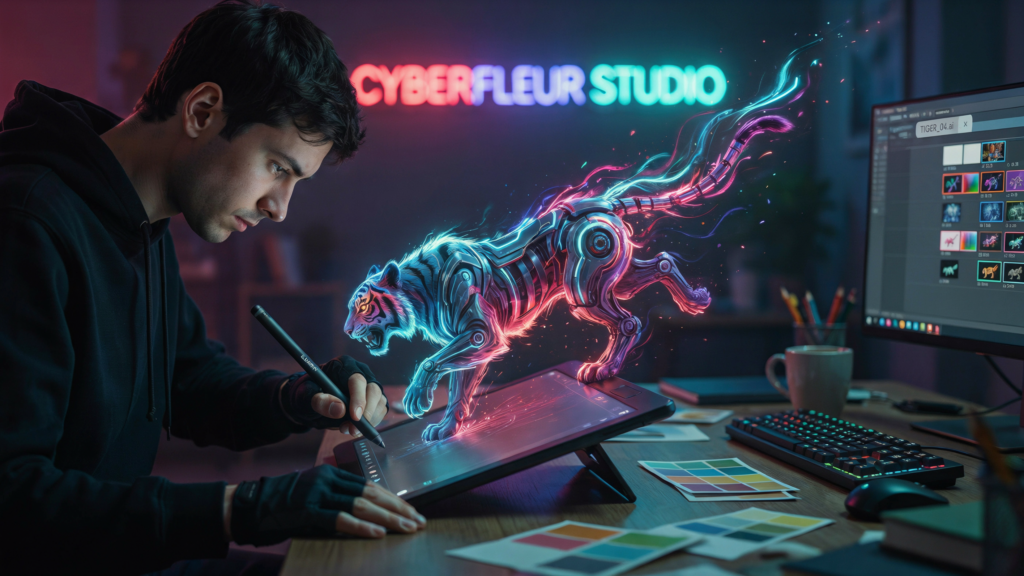
Animated content is so much more than a novelty purpose. While static text and flat pictures often do little to keep audiences engaged with the reality that human attention spans have never been shorter than they are today. This is exactly where the incorporation of artificial intelligence animated images is revolutionizing the communication across sectors. Subtle animation or cinematic effects allows businesses and creators to grab your attention and keep it much more effectively than traditional media.
Modern Marketing & Digital Advertising
The first three seconds of a digital marketing ad can make or break its success. Brands are already abandoning costly, labor-intensive live-action shoots and embracing AI for fast prototyping. Animated components enable organizations to develop catchy social media adverts, product demonstrations and promotional banners in a fraction of the usual time. From an e-commerce brand showing how a shoe material flexes in hyper-realistic styles to a software company explaining some complex workflow, you can get this graphics cheap and with high-impact.
CONTENT CREATION & SOCIAL MEDIA
Instagram, TikTok, and YouTube Shorts are all powered by the preferences of algorithms for video content. Many independent creators and small businesses do not have the resources to consistently create top-level video content on a daily basis. Nowadays, a large number of successful influencers will use lots and lots of artificial intelligence animated images to halt the user. You can instantly create dynamic background loops, animated podcast covers and visually impressive story backgrounds that keep social feeds continuously fresh and engaging.
Web Design and UI/UX improvements
Static websites can get old and unexciting quickly. Today web designer do the simple and elegant animations to make UX( user experience ). Designers in place of heavy video files that slow website loading speeds use light-weight, AI-optimized looping graphics for hero sections, landing pages and micro-interactions. Such assets prolong page visitation times, informing search engines that a website is rich with interesting and valuable content.
Creating Animation Images with Artificial Intelligence:Step by Step Guide
You may think creating your own AI animated images is hard, but modern UIs have made it so easy. Here is one possible workflow in order to transform a creative idea into a dynamic digital product.
Ideate and Construct the Prompt
The best animation starts with a clear concept. The AI depends on your description of what you want to see, therefore the specification is required. Make sure to describe the mood, light and speed of motion rather than relying on a vague prompt like “ocean waves”: “Aerial slow-motion drone shot of soft ocean waves falling on black sand beach during golden hour with 4k resolution.”
Selecting Your Generator
Choose the right tool according to your project. For example, if you want hyper-realistic human movement use things like Sora or Runway. If you want a more science-fiction, quirky, artistic or stylised anime look for your project then consider Pika Labs or Stable Diffusion instead. All these tools have free trials so you can test before committing to a subscription.
Motion & Camera Controls
After you’ve got your base image, you can set where stuff will go. Most current generators include a feature called “motion brushes” where you can literally paint over a specific area—say, water, smoke or your character’s hair—to instruct the AI to animate only that region. In addition, you need to interactively strengthen camera controls (such as pan/zoom/titling) when turning a static asset into full dynamic artificial intelligence animated images.
Post-Processing and Upscaling
AI-generated videos can sometimes appear a little blurry or show compression artifacts. If you want your animation to look really professional pass the final clip through an AI video upscaler (such as Topaz Video AI or built-in methods in CapCut). It increases crispness, stabilizes frames, and readies your visual asset for HD screens and mobile_devices.
Proper Ways On How To Write Animation Prompts
Here are some quick prompting tips for getting the most from your generative software:
Indicate the Medium: Let the AI know if you need a 3d render, a claymation style, a photorealistic video or cartoons being hand-drawn.
Control the Pace — Choose Words That Sound Slow-Motion support timelapse gentle breeze prompt fast transition
Camera Shot — Use cinematic terms indicating the camera, such as dolly shot vs. macro lens vs. low-angle view vs. tracking shot to help indicate a virtual camera perspective for the AI
The Ethics of AI and the Challenges of Creating Motion Graphics
The rise of powerful neural networks comes with its own share of ethical considerations and growing pains like any other disruptive technology. The wide acceptance of animations based on artificial intelligence opens up multiple creative avenues for the future but also poses complicated ethical, legal and social dilemmas that must be tackled by design.
Intellectual Property and Copyright Issues
Ownership is the most urgent of problems to be running into. Who owns an AI-generated animation? Who is really the author of any piece of content coming from a generative pretotyping system — the user who wrote it, the designers and engineers behind building out such software, or even worse — each and every single artist whose work went into training that machine learning model? Meanwhile, copyright regulations globally are trying to catch up with these developments. Works entirely produced by machines are not copyrightable in many jurisdictions. The absence of federal legal protections leaves the very real possibility that competitors may easily replicate AI-generated assets used for core branding and therefore forces businesses to be cautious about relying solely on AI output.
Misinformation and Deepfakes — The Worst Against Children
There is a certain persuasive power with motion. Because moving pictures are seen as more credible than still photos and difficult to falsify, contemporary artificial intelligence animated depictions can be powerful agents of falsehood. Public faith in digital media starts to crumble when bad actors can easily animate Doge meme historical photographs, create fake news videos of newscasters, and produce synthetic videos of public figures performing different tasks. Platforms and developers are exploring watermarking technologies and digital provenance tools to help us know if a piece of media was created by a camera or generated by an algorithm.
Through the Fair Compensation and Training Datasets, we want to alleviate bias in internal evaluation.
Moreover, the data used to train AI animated image generation is still hotly contested. A whole bunch of popular models were trained on millions of copyrighted videos and images downloaded from the Internet without any permission (or revenue share) with the original authors. There is an increasing push back from creatives calling for ethical sourcing models. Other newer platforms are constructing databases that include only licensed or public-domain footage, so if their styles are copied, contributors would receive fair compensation.
Quick Human creative + machine generated: Where is that happy middle ground?
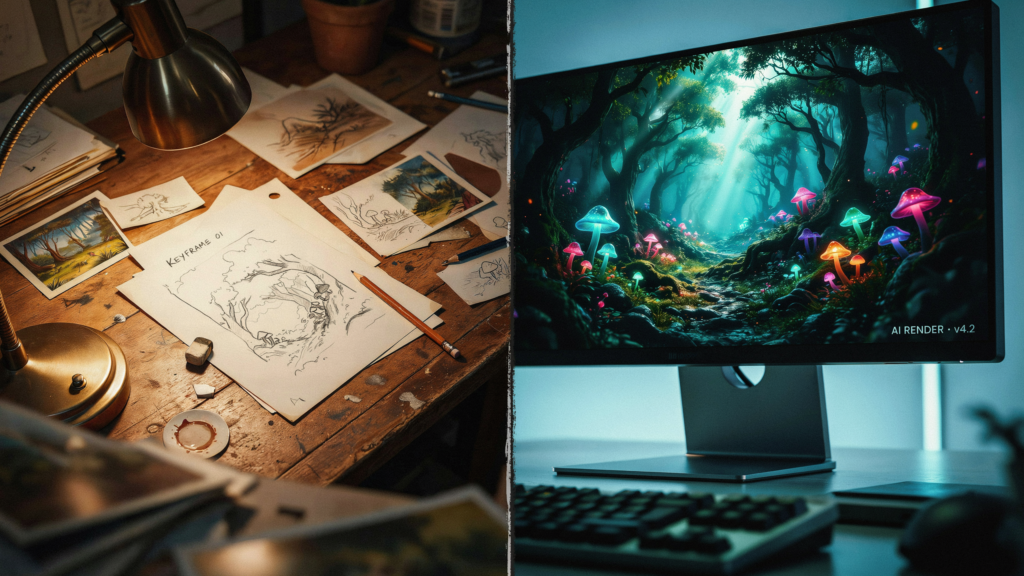
While fears that automation will make human professionals unneeded, history shows that technology often opens up roles for people instead of removing them. Largely available AI animated images have generated a new era in academia than they replaced human talent today.
You Can’t Replicate The “Human Touch”
An AI can create beautiful movie scenes in mere seconds, but it does not have the lived human experience, emotionality, and purposeful intent to that scene. A machine cannot know love, loss, pain or humor or cultural satire; it can only detect existing signals in data. A designer knows how to intentionally subvert rules in a way that creates emotion. Even the highest quality animated projects require a human eye to convey the narrative, maintain consistent art direction and fine-tune final edits to ensure they read on emotional, fundamentally human level.
Collaborative Workflows
So rather than seeing it as a threat, innovative animators and studios are embracing AI as an extremely effective partner. AI is great at the boring, repetitive tasks—like in-betweening (the process of creating the frames that fit between two key poses), background textures or experimenting with quick color iterations. Human animators can take these time-costly processes off their hands by allowing algorithms to work on them, freeing up the creative space required for concepts, strategizing, and storytelling.
Bridge the Gap Between Creative Professionals
Designers being trained on these is a new trend and doing up-skilling required in order to adapt. Prompt engineering, the spatial vector understanding, and how to live with AI outputs in traditional editing software (Adobe After Effects, …) are coming as very wanted skills. It’s not AI that hold the future, it is those creative pros who know how to crank it at all.
The Future of Animated Images from Artificial Intelligence
So, forward-looking, AI animated images² are going to shake things up even more with a whole lot of new potential for entertainment and software UI. This is a steep transit out of pre-rendered video loops and eventually into an era of completely real-time, interactive generative media.
At the same time, with virtual reality and augmented reality still coming to prominence, where will they see companies succeed in integration?
The most exciting horizon is the integration of generative AI and spatial computing. The need for dynamic 3D assets is enormous in VR and AR environments. In the near future, our virtual environments will not depend on data but instead be made up of static pre-defined textures. Then, they are going to bring their integrated AI engines into play by creating responsive 3D animated ‘artificial intelligence’ responses that respond dynamically (in real time) to eye movements, physical action or voices. This will form immersive experiences that are ultra-personalized in an entirely unprecedented manner!
Hyper-Personalized Visual Content
Picture opening up a streaming app or news website, where each video thumbnail, banner and infographic is dynamically generated to imitate your reading style, someone who you want to get in the mood of and the type of aesthetic you prefer. Such hyper-personalized level is now possible. This means that brands will run automated marketing campaigns, a base visual becomes 1,000s of tailor-made moving graphics designed to work in the moment with an audience segment.
Conclusion – Taking Advantage of an Ever-Changing Future
To summarise, it is clear that the high rise of ai animated images is more than a passing trend; it has transformed the way we generate digital art and motion graphics. But it raises a lot of fundamental questions about copyright, whether AI-generated pieces are art in the first place, and what happens if someone feeds AI training data that is ethically dubious. Empowering storytellers where financial or technical barriers were previously kept the stories locked away, by democratizing the tools of animation, this technology can allow writers to hire out dependence on independent developers but rather collaborate with all types of makers and visual artists.
The road ahead is long (and cloudy) but early indicators of success point to those creators that think of these neural networks not as a threat, but as an tool in the arsenal to help them create new dimensions for their imagination. Combining human empathy, self-less strategic direction and technical skill with the brute force of speed and computational power that is generative AI will create some of the most incredible digital art, a true golden age.
Frequently Asked Questions (FAQs)
Can artificial intelligence animated images be copyrighted?
At the moment loi and its in most countries, such as the United States, this means work generated by an artificial intelligence platform without human involvement cannot be registered Copyright. Nonetheless, if a human creator makes substantial alterations to the AI-generated visual, or reasonably incorporates it into an expansive original creative work, that composite work is potentially eligible for intellectual property protection.
AI Animated Image Makers: Tools or Sites
Various platforms dominate the market based on your needs. For photorealistic motions and advanced graphics, OpenAI’s Sora and Runway Gen-2 are the top players. Pika Labs is a really easy platform to build stylzed clips, anime effects and playful loops. Experienced users sometimes choose Stable Video Diffusion as it allows local control and customisation.
Can I make commercial use of AI animations generated?
Yes, however this is hugely dependent on the terms of service from the platform and the subscription tier you are using. Commercial AI video generators, in the most cases, require a paid subscription to give you full rights of use over the assets generated. Always be sure to check the licensing terms of the respective platform when using their outputs in commercial campaigns.
Are AI generated animated images safe for businesses to use in ads?
Yes, businesses can use these engaging dynamic visuals safely in digital advertising, social media campaigns, and web assets. In order to avoid copyright concerns, numerous organizations favor AI systems that educate the neural networks using solely against-the-stick footage or supplies within the public domain, guaranteeing that any created outputs are paraphrased commercially protected.