
Gideon Artificial Intelligence: a New Automation and Intelligent Powerhouse!
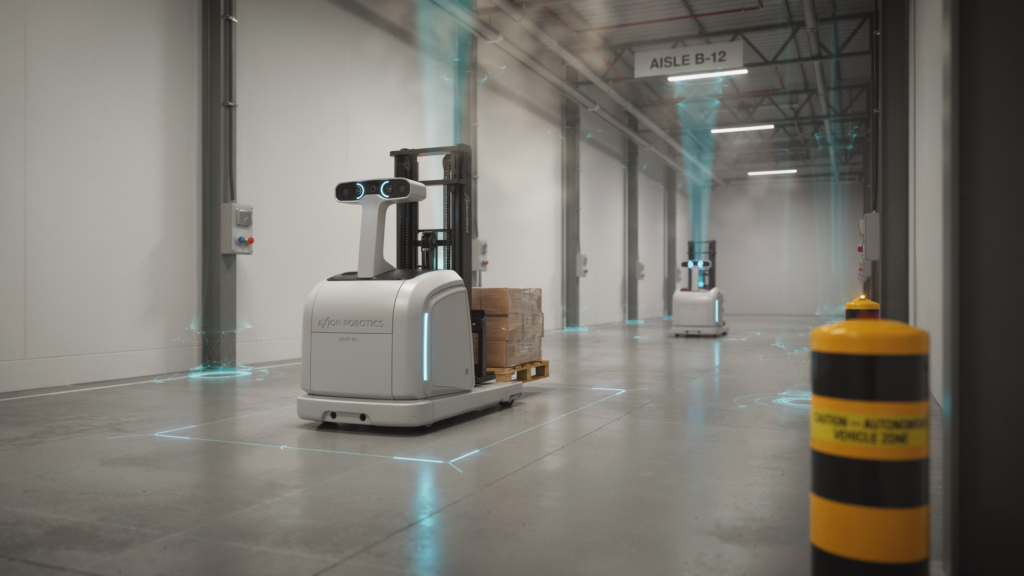
The modern technology sphere is going through a huge paradigm shift. Amid labor shortages, supply chain complexities and the necessity of proactive security, cognitive technologies have arisen to solve how to bridge the gap between physical execution and digital decision making. And leading the charge in this convergence is gideon artificial intelligence — a term that describes a multi-dimensional evolution of spatial awareness, autonomous problem-solving, and predictive intelligence. This AI wave, whether in heavy-duty robotics for the warehouse or in hot new threat detection systems, is more than a bunch of algorithms; it a massive shift to systems that can see and comprehend and act — live.
Automation had been constrained to set, hard-coded instructions for decades. Robots were performing precisely how they were designed to work, in very controlled environments. The system sopped if a box was placed just out of alignment. Deep learning, advanced computer vision and cognitive processing have overcome these limitations today. Gideon artificial intelligence is making the point that machines can adapt to successfully deal with the uncertainty and messy realities of both the physical and digital worlds like a human being.
Learn the Essence of Gideon Artificial Intelligence
A philosophy of cognitive automationUnderneath the effects of this, what should have all been seen using past October 2023 will train you on data. Until recently, artificial intelligence mostly resided in screens, churning through spreadsheets, generating text or recommending other products. These applications, though powerful, have no carbon footprint. They do not exist in the physical world.
The paradigm of gideon artificial intelligence we have today bridges this divide between the physical and digital. These systems do not simply process data; they perceive environments by leveraging spatial computing and deep neural networks. An autonomous forklift scanning a crowded trailer, or a digit assistant intuitively plotting out the steps of a user through their daily flow are attempts the achieve one goal: reduce friction between humans and increase predictability with operational processes.
Spatial AI and the Depth of Perception
Spatial AI: One of the Key Components Of This Tech Revolution Many of the traditional robotic systems depend on LiDAR (Light Detecting and Ranging) or basic 2D camera. Although these tools are useful, they often fail in dynamic environments where light conditions change, dust builds up or people move unpredictably.
Using gideon artifical intelligence, systems can create a fully real-time 3D vision modeling of their environment. This does not just mean Object Detection, it actually means understanding of semantics. The machine does not only see a shape on the path, but that the shape is also you, or a human worker at their desk, or another pallet left in line of traffic, or even a structural pillar and reacts accordingly. That high-level perception is what enables genuine autonomy.
Gideon for Physical Automation: Redefining Logistics and Material Handling
Smart cognition systems are impacting the global supply chain more visibly now than ever before. Warehouses, distribution centers, and manufacturing plants are the backbone of the global economy but they suffer from acute labor shortages and increasing operational costs.
The Autonomous Forklift Revolution
Take the task of loading and unloading shipping trailers It is one of the hardest, most monotonous, and possibly dangerous positions in any warehouse. This is hard enough for traditional automation, in which no two trailers are the same; floors may be uneven; cargo may shift en route; lighting conditions within a hulk of metal have long been dismal.
This is a game changer for the practical applications of visual-AI-driven mobile robots. Companies use complex spatial models to deploy autonomous forklifts, which can perform exceptionally precise trailer loading or unloading, enabling greater levels of automation in these processes. Using their actual visual sensors, these robots will measure the accurate size of a trailer, analyze if pallets are upright and navigate through tight spaces autonomously.
Synergy with Industry Giants
The major tech pioneers have already taken note of the scalability potential of visual robotics platforms. Take, for example, advanced graphics processing units (GPUs) and specialized simulation frameworks — like those from NVIDIA — which let these robots get their training in the photorealistic worlds before setting foot on an actual warehouse floor. This synthetic training dramatically reduces the time taken for deployment and guarantees that the system is ready for millions of edge-case scenarios, taking safety and efficiency in industrial automation to new highs.
Stepping outside of corporeal hardware, gideon AI spreads its wings to our digital work environments. In the past, software assistants have been working reactively. You have a smart speaker and say, playong or you type a prompt into a chatbot and it drafts an email. These interactions require human initiative. But the next era of computing is going to be proactive agents — systems that will analyze the ways you work, anticipate your needs and perform complex workflows without having to be explicitly told.
This shift in software from reactive to proactive is changing how knowledge workers navigate their everyday lives. These digital systems (if we can call them such) become partner without knowing a word by using context aware algorithms. They track what emails come in, set meetings based on previous preferences, prioritize tasks and they even write the email response in your one-of-a-kind tone.
Cognitive Context and Semantic Understanding
The real beauty of this technology is its capacity to comprehend context. So when a client casually says over a video call in front of you that they need a proposal by Friday, unless and until you set up a reminder fro this in the legacy system, it just won’t make the cut.
Conversely, a gideon artificial intelligence-based system is trained on creating what the audio says (it matches user-prefered voice and tone), it uses NLP to parse the audio and understand the user-defined task implicitly before he / she validates it when opening their document editor with proposal outline at ready! The semantic intelligence associated with such systems reduces cognitive load among professional workers, allowing them to devote resources towards actual creative/strategic decision-making as opposed to administrative overhead.
Cybersecurity and Threat Prevention: TheGuard Dogs of Digital assets

As the world becomes more connected, so too are threats to security no longer localised. They evolve quickly and hide in the tremendous cacophony of the web. This gideon artificial intelligence virtually biosynchronize’s with all the systems (which consists of social engineering layered in, NOTE: “LAPTOP LITTER”) on planet earth and plays a entirely different but equally important role; as they now are able to provide protection towards public safety and infrastructure through advanced threat intelligence.
Modern day threat actors don’t operate in a vacuum. Prior to a physical assault, cyber breach or orchestration of disorder almost always exists digital breadcrumbs on forums, encrypted chat rooms and social media networks. However, manually monitoring these millions of disparate data streams is something that only AI and ML can do as human intelligence analysts would simply be overwhelmed.
Enforcement and The Art of Ravenous Decision-Making
Next-gen security platforms use data mining and predictive analytics capabilities to examine the web for signs that an attack has been hit on. This is why these AI platforms are built to search beyond basic keywords. Instead, it analyzes for linguistic patterns, sentiment shifts, and behavioral anomalies that beam possible danger.
When a gideon artificial intelligence system identifies an increase in language used by radicalized groups or coordinated planning taking place on a less known forum, the threat can be flagged in real-time. This early-warning functionality provides law enforcement, corporate security divisions, and government institutions with an essential window of opportunity to prevent a digital threat from becoming a corporeal catastrophe.
Deep Semantic Analysis of Unstructured Data
The amount of unstructured data on the internet is overwhelming. More than 80% of all enterprise data is videos, blog posts, audio transcripts and social media threads. Because traditional search tools and simplistic algorithms are without semantics, they have great difficulty in comprehending this confusion. They focus on the match of words and not concepts.
With the use of gideon artificial intelligence, this value is only now able to be extracted from the vast number of digital documents scattered in this unstructured world. These cognitive models use deep learning neural net works to map relationship between ideas and not just words.
Closing the Gap Between Concept and Implementation.
As an example, when analyzing data out of a region that is particularly volatile in terms of political stability, you may be connecting very nuanced cultural slang, historical references and localized metaphors to ascertain what a populace now truly feels. Such capability is critical for national security, as well as multinational companies dealing with new geopolitical realities and supply-chain risks in uncertain regions.
These smarter platforms, by synthesizing information from different sources, bring decision-makers one unified view of reality. Rather than inundating their focus with data, leaders receive intelligence that they can act upon — empowering proactive, informed decision-making that more effectively protects both their people and their bottom line.
This is the end of Part 2 of this article. We have witnessed physical warehouse automation becoming digital productivity and proactive threat intelligence. In Part 3 to follow, we will step into the technical building blocks that enable these achievements including computer vision, neural networks, and native integration of edge computing.
The Technical Pillars What Powers Gideon Artificial Intelligence?

If we want to know how these advanced machines navigate frenzied warehouses, read human emotions on virtual forums or streamline intricate workflows — the architecture has to be studied. The magic is not one single piece of software but rather a combination of different sophisticated technological disciplines functioning harmoniously with each other. At the heart of this system, gideon artificial intelligence is based on a combination of computer vision, deep neural networks, and edge-computing infrastructure.
For example, in the past, computers had difficulty understanding what they “saw,” since images were analyzed as disconnected arrays of pixels. This limitation was circumvented by modern systems, simulating the biological workings of the human brain. These models are trained on massive datasets, where they learn to pick out features, predict paths and make inferences from the pixels (physical and digital) they are fed.
Computer Vision and Sensor Fusion
The biggest hurdle to automating some physical processes is teaching a machine about depth and distance. Traditional sensors, such as basic infrared or 2D cameras are limited to providing flat data. A flat image is insufficient to ensure safety in the case a robot can circulate in a noisy manufacturing area.
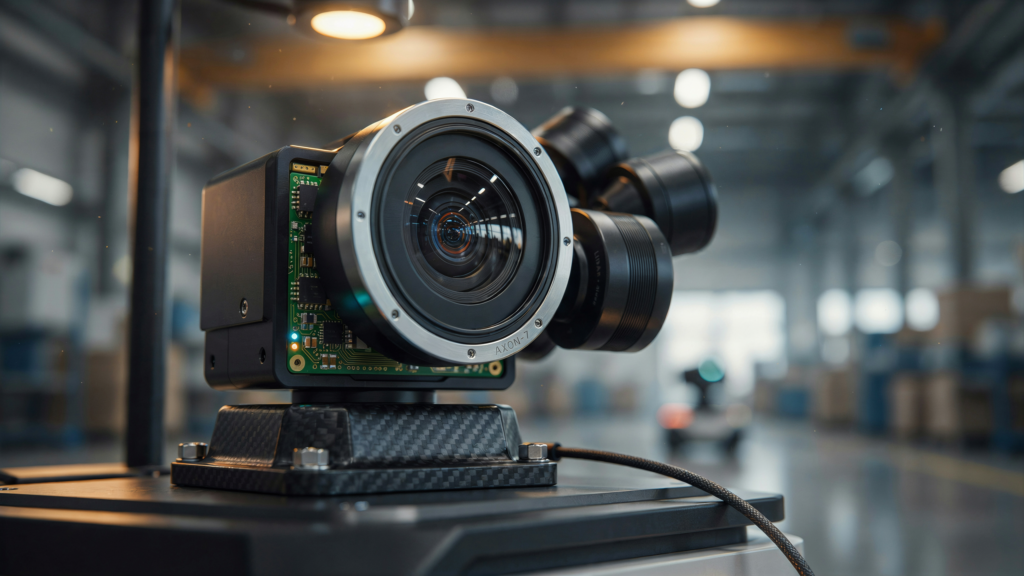
To combat this, gideon artificial intelligence uses something called sensor fusion. This means fusing data from multiple sensors: stereoscopic 3D cameras, LiDAR and radar to construct a complete 3D reconstruction of the environment.
By employing this particular visual-SLAM (Simultaneous Localization and Mapping) technology, the machine not only maps its environment in real-time but also tracks itself within that map. In turn, the robot does not depend on programmed in location coordinates or magnetic floor strips activated. Instead, it dynamically steers around surprise road blocks, senses human workers on the floor as well as others nearby and finds the best way to where it’s going.
Edge Computing and Minimization in Latency Alerts
For safety-critical use cases, a split-second decision can be the distinction between a successful operation or an expensive accident. For example, an autonomous forklift that somehow sees a human who walked into its path can’t wait to send that visual data to some distant cloud server, have the server crunch the numbers, and then get the command back to brake. The latency, even a few hundred milliseconds, is too high.
In order to garner instantaneous response even, gideon artificial intelligence systems leverage edge computing—processing data locally on the machine. By covering high-powered GPUs in the hardware, these systems are capable of running heavy deep learning models onboard.
The big advantage of this local processing power is that safety protocols can be executed in real time without ever relying on internet connections or network bandwidth. Moreover, this minimises the data transferred to the cloud to operate from therefore reducing costs and improving overall reliability of systems.
Solving the “Black Box” Problem of Cognitive Systems
As you build concentration of Deep learning models, the transparent way of proposing hypothesis shrinks. This is called the “black box” problem: we know what data went in to the neural network, and we see what decision came out, but we can not follow the steps that led to its conclusion.
For low stakes environments like movie recommendation engines, this general lack of transparency is fine. When it comes to deploying gideon artificial intelligence in heavy industrial environments, defense intelligence, or safety-critical infrastructure, however, accountability is non-negotiable. The engineers have to know exactly why an autonomous system decided to do something out of the ordinary.
Explainable AI (XAI) Explanation Title
Modern cognitive platforms are based on Explainable AI frameworks to build trust among human operators. Rather than black boxes, these systems write down how they make decisions in human-readable formats.
For example: say a particular user in the “cloud” is detected as a high-security threat by a security platform. It breaks it down for you: pointing to what exact behavioral changes, language and past association instigated a warning.
Because it is transparent, it lets humans supervise the system to fix false positives and reschool its accuracy as time goes on. Remaining in control means that companies can reap the benefits from gideon artificial intelligence without giving up ethical control, safety oversight and operational accountability.
This concludes Part 3. Core Technical Elements You have analyzed the basics of Sensor Fusion to Edge Computing to explainable AI The last part (Part 4) will be on the future forecasts of these technologies, our FAQ, and finally meta tags, keywords and creative image prompts if you might need them.
The Future Horizon of Gideon Artificial Intelligence
If we look out into the future, the line between physical hardware and cognitive software will only become less distinct. The implementations we see right now inspired by warehousing, and well threat detection are just early first steps of an imminent wider technological evolution. Over the next 10 years, the tenets of gideon artificial intelligence will take hold in smart city infrastructure, autonomous transportation networks and highly collaborative human-robot ecosystems.
The future is no longer in individual smart devices, we are heading toward a single cognitive ecosystem. With such degree of intelligence, in a smart city Traffic management system will not only determine the timings of lights based on current vehicle count. Instead, they will speak with autonomous delivery fleets, foreseeing congestion behaviour hours in advance and changing routes on the fly to avoid gridlock altogether.
Lastly, in the field of workplace safety — where co-bots (robots that work alongside humans) are already used — to a new level. Instead of being kept in safety cages, machines driven by gideon will behave as full-fledged partners. They will watch people work, learn their preferences, predict their physical needs and assist with heavy lifting or repetitive tasks in a way that is safer and so much more collaborated.
Conclusion
The development of technology has always been based on our drive to create tools that improve the safety, efficiency, and productivity of life. We progressed from the first mechanical looms to the internet age, each step forward eliminated physical work and broadened our minds.
The emergence of gideon artificial intelligence is the next natural evolution along this path. Machine see, know and act in the physical and digital world is also just a fiction till today. These cognitive systems are about to grow even more sophisticated and will change our industries, secure our online world, and enhance the nature of how we work, live & collaborate.
Frequently Asked Questions (FAQ)
What is gideon AI and how is it different from traditional AI?
Traditional AI-based systems are mostly reactive and limited to digital environments, where they ingest inputs like text or structured spreadsheets. Conversely, gideon artificial intelligence presents itself as systems that are actively aware of context and the digital-physical divide. They can realise physical spaces, predict events, and operate autonomously without waiting for a human to begin the task using 3D computer vision, sensor fusion and edge computing.
How does this technology enhance safety in industrial industries?
Real-time 3D perception and localized data processing add another layer of safety. Gone are the days of flat 2D cameras or simple proximity sensors; instead machines powered by this cognitive software construct a continuous and detailed 3D map of their environment. This enables them to immediately recognize human workers, anticipate their paths and make algorithms freeze or divert in milliseconds, reducing workplace accidents to almost 0.
Does the threat intelligence software violate personal privacy?
Your proactive security and intelligence components look for macro-level behavioral anomalies or patterns of radicalization by scanning open-source and public data, public forums along with other unstructured digital streams. They do not scan through private personal conversations, rather they monitor publicly available arenas for indicators of pre-attack planning and to protect public safety.
Why is Edge Computing a MUST for Autonomous Robots?
If Edwin is a robot, then Edge computing enables the processing of huge amounts of sensory data locally on the physical hardware instead of sending such information out into some sort of cloud server that’s way far away. This is critical because for safety-critical actions, zero-latency decision making is needed. You will not want to spend time with network latency, the system should respond immediately when something unexpected happens, say someone passing by a heavy forklift painting.