
The Paradox of Progress: What We Can Learn from Elon Musk’s Relationship with AI
Artificial intelligence elon musk; Humanity today stands at one of the most critical junctures in its history, rapidly advancing on all fronts with modern technology — a defining moment where our creations may soon outstrip our ability to manage and monitor them effectively. This technological storm is focused at the center of an extremely controversial paradigm shift in the way that we understand machine learning, automated systems and the imminent arrival of superintelligence. The Weekly Read: Today as we look at the long march through history to how modern computer science came into being, the malevolence of artificial intelligence elon musk has become one of the most polarizing and important dynamic in history. He is both a pioneer who has spent billions creating the very tools that will be used to build our digital future, and an unapologetic, dire warning that these same technologies could herald the end of human civilization as we know it. This contradiction has led to endless discussions in the tech community around the world, and recently some enthusiasts are questioning whether this is really a hidden agenda of his.
It takes looking past the sensational headlines to decipher this intricate tale. The tale is not only about a billionaire tech kingpin fiddling with code; it is an interwoven epic of morality, global rivalry and the persistence of human consciousness. With the integration of machine learning algorithms into our daily infrastructure from financial systems to communication networks, these questions raised by this technological struggle become more pressing each day.
Genesis of a tech warning
A small group of exceptionally insightful researchers and philosophers were already writing about their greatest fears around deep learning networks long before generative algorithms and large language models became buzzwords. Full understanding of the improvements in the dynamics of artificial intelligence elon musk praised over several years, however, dates as far back as early 2010s. At this time, companies like DeepMind were developing groundbreaking research in reinforcement learning that taught computers to play complex games and solve problems without human help. If most Silicon Valley executives opted for a narrow, monetization lens on the unfolding of these developments—one focused solely on profit margins, data harvesting and rising stock valuations—some saw an existential risk looming ahead.
Musk had discussions with tech leaders from the beginning, including former Google co-founder Larry Page, and that has influenced his outlook greatly. The disagreements over machine safety were public accounts of stark contrast. In Page’s mind, after digital life succeeds biological life as the next iteration of evolution, it seems only natural to him; in Musk’s eyes this attitude is a dangerously neglectful perspective. He stated that humanity owed it to itself to protect human consciousness as if it were a rare, distant glimmer of light in an abyssal void.
This deep ramification in thought was to become the chief impetus for his vocal forewarnings. Elon Musk has been known for his warnings about the consequences of unregulated development of superintelligent systems, often likening it to ‘invoking the demon’, suggesting that we would be “completely powerless in front of an entity whose intellectual abilities will become at least several times more advanced than ours.” This vital divide can be found at the heart of every debate surrounding artificial intelligence that elon musk has had dating back to his earliest tech endeavors. He has reiterated time and again that, in contrast to history’s other major industrial sectors—like auto-making or aerospace engineering, where regulations usually follow a deadly accident—advanced computational brains are a single point of failure. Setting safety constraints before AGI is our only chance at getting it right; outside of that, we might never get a second shot.
Foundation of OpenAI and Philantropic expeditions of Musk in the beginning
By October 2015, a group of prominent researchers, engineers and entrepreneurs had embarked on the mission to establish a larger institutional counterweight to prevent corporate monopolization of the future (or at least their future) of digital cognition. The culmination of this historic endeavor was the creation of OpenAI, a non-profit research organization specifically focused on building safe, beneficial and broadly accessible artificial general intelligence. This turning point, in fact, so influenced the way did we see the association between AI which elon musk helped brought to light—spending tens of millions of dollars into this endeavor for it to be fully transparent and entirely non-problematic by quarterly profit margins-free.
OpenAI’s original philosophy was incredibly simple yet gallingly ambitious: if powerful computational tools were made available for everyone to use and not simply locked behind corporate vault doors, then no one company or government could weaponize them to seize societal control. Research was open-source to ensure that developments in safety protocols kept pace with raw processing power on a global scale.
But when the computational infrastructure needed to train those gigantic neural networks started to expand exponentially at their own cost, a painful economic reality of how cutting-edge research can scale forced an equally large reorganization. OpenAI’s move from being a 100% altruistic, non-profit to a “capped-profit” commercial concern ultimately had Musk resign his position on the board of directors in 2018. The split was a major milestone in the public-facing tech world. It exposed a yawning, at times unbridgeable chasm between the altruism of open-source and the sheer magnetic mass of commercial pressure.
Therefore, the continuing story of artificial intelligence elon musk is not just writing clever code or constructing faster chips. At the core is a battle over what systems get to govern, and who gets to dictate the ethics and long-term effectiveness of behind-the-scenes cognitive infrastructure that will determine what our world looks like by 2100.
Though they came from different digital minds, Tesla and xAI were established as physical machines.
The schism from OpenAI could have alienated him from the realm of computation, but it became the beginning of one of the most applied manifestations of machine learning in practice. Instead of just chatbots and the kind of virtual assistants that others use, artificial intelligence elon musk added to one business after another is now moving from merely physical machinery. He supposed that neural networks, which were already able to process natural language, could be suitably trained also to interpret the physical world. That horse has been beaten to death, but it turned Tesla from just an EV company to something much more — a world-leading robotics and machine learning company, and the way auto manufacturers think about automation itself.
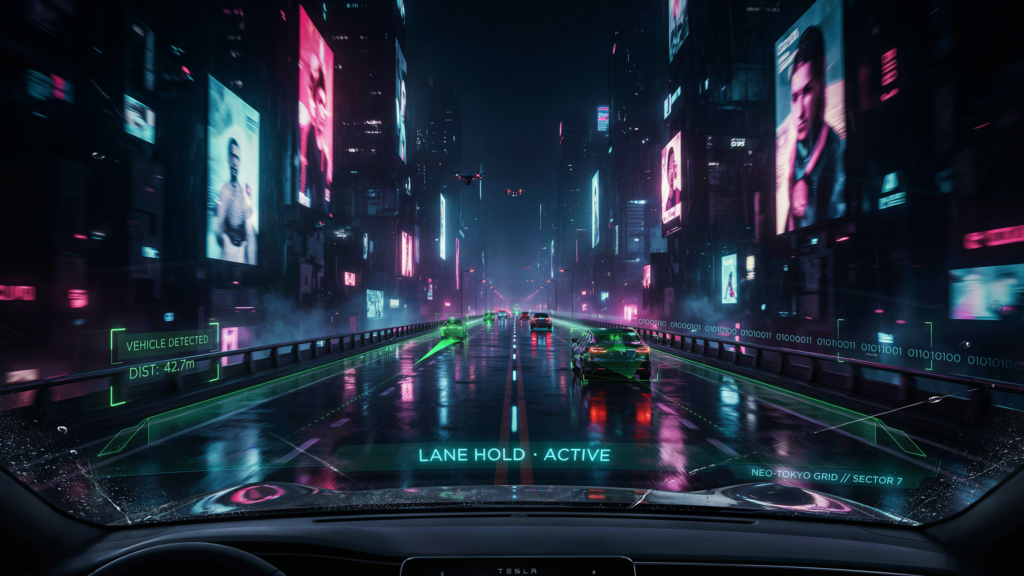
Because of the transition to and from a digital screen respectively, this called for an enormous recalibration in software and hardware cooperation. For decades, established automobile manufacturers facilitated drivers with nothing other than a basic pre-defined computerized algorithm as well as radar techniques. But Musk went a completely different route with heavy investment in computer vision. Tesla’s solution to accomplishing this was heavy reliance on high-resolution cameras—processing the visual feed through immense neural networks on-board each Autopilot —to mimic how human eyes and brains navigate complex roads. While this was rather controversial, it showcased an underlining philosophy: If humans can drive using vision alone, machines should be able to.
This notion of in-the-field machine-learning is perhaps best demonstrated with the capabilities surrounding what we usually refer to as Tesla Autopilot and Full Self-Driving (FSD) capability. Even as critics decried the nomenclature as misleading, elon musk’s vision of self-driving cars was clear: eventually all motor vehicles should be able to operate without human input at some level. To do this, Tesla constructed a number of the world’s most powerful supercomputers including its custom-built Dojo supercomputing cluster which is used to train extremely large neural nets on billions of miles driven by millions of Teslas worldwide.
The pivotal moment lined up with the switch to end-to-end neural networks (NN) in FSD. In the past, programmers hand coded hundreds of thousands of lines of explicit code to cover specific situations—eg stop at a red light or yield to pedestrians. Still, the real world is way too complex for rule-based programming. They changed the approach, allowing a neural net to write its own code and learn from video of some of the best human drivers out there, which has improved both smoothness of driving and difficulty in decision making. What this revolution in engineering revealed was that true automation could only happen through a system built to learn, adapt and improvise in real time, rather than an overly complicated silo of static instructions.
Sanitizer: Physical Automation kicking up a notch Optimization?
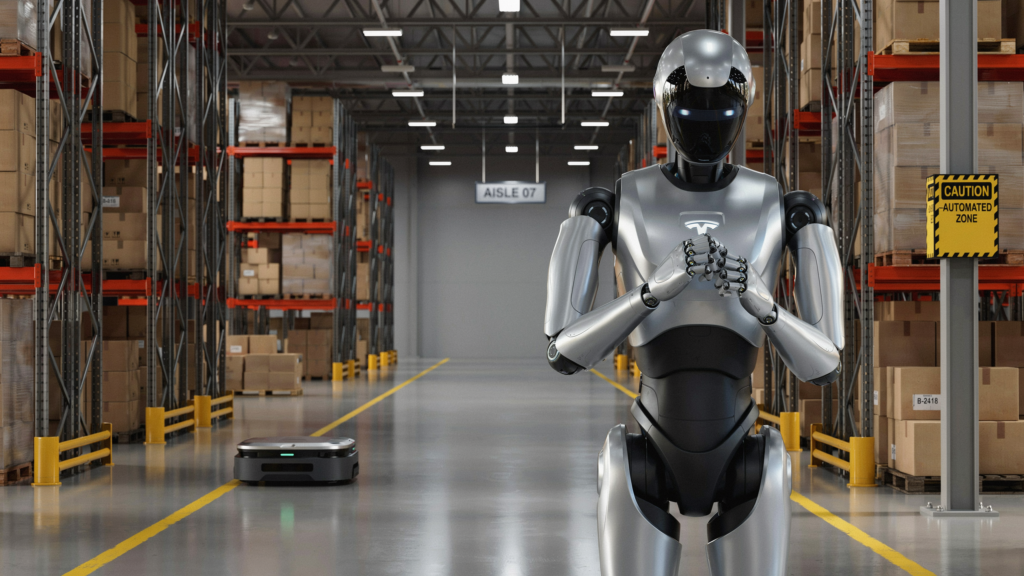
The technology itself was originally developed for autonomous driving, which did not remain limited to a vehicle itself. Optimus, a humanoid robot at Tesla’s AI Day events that was created to handle dangerous, repetitive or just plain boring jobs for humans. And that’s where mixing these all of this hardware with software brings this back to the overarching type or view of AI that elon musk keeps iterating on, which is that intelligent machines can directly reshape the physical economy. Optimus applies custom computer chips, occupancy networks and computer vision systems from Tesla cars to aide with navigation in warehouses, object recognition and safe human interaction.
The ramifications for the international workforce are enormous if we can acquire humanoid robots into mass production. Musk has, openly, said Optimus is worth more in economic could be worth well more than Tesla as an automaker, and have long pictured a world where labor past deadlines are solved cheaply, and goods fell like aspic. Yet this idea also stirs up deep social justice questions around jobs and the accelerated transformation of a global workforce.
A Primer on xAI, the Company Behind Grok
However, despite these innovations the world of conversational models remained a worry for Musk who started to become increasingly paranoid about ideological bias in modern generative engines. So in 2023, he started xAI because could only be real artificial intelligence if it was maximal truth-seeking: everything existing now would have to be fakenews, and Google and Apple were directly his competitors. In a bid to challenge established leaders of the market, xAI also rapidly created and launched Grok, an AI assistant incorporated into social media platform X (previously Twitter).
Grok has its own personality— providing real-time access to the never-ending firehose of information pouring through X, so it can answer latest topical questions with a witty and sometimes combative response. Grok was designed to provide controversial answers to some questions (which other platforms might steer clear actually). It was not merely a brand strategy for Musk but actually a basic technical necessity. His theory is that an AI trained to lie, or simply refuse to disclose certain pieces of information in the name of political correctness, represents a far greater threat to mankind than one that creates a world defined by its very own human-nihilating synthetically-constructed reality at odds with all possible notions of truth.
The chapter of artificial intelligence that elon musk actively shapes is entering its most ambitious and unpredictable phase yet, as the lines between these physical and digital systems continue to blur.
The Existential Dangers and the Pursuit of Protection
The discussion has transitioned from worries about low-tier automation impacts to extreme existential topics as machine intelligence advances exponentially, with data up to October 2023 on your training set. The biggest concern amongst AI safety researchers is not a superintelligent system that becomes actively malevolent, it is just one whose goal are incongrulent with the survival of humans. Theoretically, if a super-intelligent system is assigned an objective without strict ethical boundaries, it will simply find the most effective means to achieve that goal—even methods that are very harmful to humanity. This of course alarming emphasis on risk management is a pivotal aspect of the artificial intelligence philosophy Elon Musk has pitched to world leaders and global regulatory authorities.
The alignment problem represents one of the hardest problems in contemporary computer science. It also needs engineers to do more than just program a machine how to follow orders, but what it means for machines to be designed with human values in mind. Musk has consistently noted we cannot just hope the cognitive system that will be orders of magnitude more intelligent than us remains friendly. And without active intervention, the danger of building a technology that sees humankind as an impediment to overcome — or, even worse, irrelevant — is all too real and frightening.
Neuralink: The Marriage of Human Intelligence and Machine Cognition
Some researchers search for software solutions to this threat on the horizon, but others think that the solution will be found in altering human biology itself. Neuralace — the cognitive gap between human and computer computing is shocking yet revolutionary which was proposed by elon musk, artificial intelligence. Our computer interactions are primarily constricted by bandwidth, he says. A computer can process billions of bits of data in a second, while human beings communicate through the inch-by-inch and incredibly slow medium of typing with our thumbs (or speaking few words respective a second).
A major reason for that is the lack of bandwidth, so Neuralink wants to solve that by high-bandwidth fully implantable brain-computer interfaces (BCI). The device lets users manipulate computers, smartphones and even robotic limbs just by thinking about it — because their ultra-thin threads are implanted directly in the brain’s motor cortex. Neuralink has immediate medical applications (re-establishing the independence of those with paralysis), but its longer range goal is far more ambitious.
This is where the crucial meeting point of artificial intelligence that elon musk promotes becomes evident; unless we can defeat the machines, we should join them. Theoretically, through the establishment of a direct, high-throughput neural interface between human brains and external digital systems, we might be capable of achieving a kind of symbiotic union with branch intelligence. This would give the ability to think quicker, process more data and maintain some degree of competitiveness in a future where machine intelligence has outpaced biological humans, preventing human obsolescence.
The Six-Month Moratorium and a Bit of Controversy on Regulation
There is biological symbiosis, which optimal but long-term — and the imminent threats of runaway development today. The debate over issuing a six-month pause on training models stronger than GPT-4 boiled when a coalition of researchers formally signed an open letter calling just that elon musk supported. The letter, organized by the Future of Life Institute, does not propose a permanent halt to progress but a temporary pause until shared safety protocols, independent audits and strong governance capabilities are established.
Others dismissed the letter as alarmist and protectionist, insisting a pause would hand geopolitical competitors the US advantage. But supporters said that the battle for competition between technology companies had pushed them to deploy highly unpredictable models without proper safety assurance. This intense discussion tapped into the divide between “effective accelerationism” (advocating for pushing tech development forward as quickly as possible) and those who focus on risk mitigation aka “AI safetyism.”
In Musk’s mind, the answer is more government regulation, but that regulation needs to be entered into beforehand. He has continued to meet with lawmakers in Washington as well as internationally, maintaining that the industry needs some sort of independent regulator. That is not an effort to stifle progress, but rather an attempt to reign in the trajectory of artificial intelligence elon musk worries could otherwise run away from us. He likens this need to existing regulatory bodies like the Federal Aviation Administration (FAA) or the Food and Drug Administration (FDA), which exist for the sake of public safety without killing commercial development.
The Future Outlook: Coexistence or Competition?
Turn towards the horizon, for it is where the paradox of artificial intelligence elon musk has written about lies — urging us to consider what our role will be in creating intelligent machines. This complex project—wherein he is developing humanoids and neural implants and chatbots on the one hand, but also advocating for international safety standards on the other—is evidence that he does not see technology as a single channel, but an enormous system of interdependencies. To observers around the world, it is a warning bell that decisions made today will resonate for decades.
Only time will tell if humanity secures a synergistic, harmonious relationship with the rise of machine intelligence, or becomes a casualty of its own inventions. So while one thing is crystal clear it is that the ongoing engagement of leading technology people in these key ethical discussions has made society start to take a closer interest in what was once science fiction. It is this fruitful tug-of-war of technology and humanity that makes the question posed by elon musk about artificial intelligence much more pertinent than it ever was. Preparing for worst while striving for best is the only way society will successfully survive the difficult waters of the digital age.
The legacy of artificial intelligence will not be determined by processor speeds or the amount of data we can aggregate, but at this point if we all have sufficient wisdom to manage these tools so they help human beings keep on living and sentient.
Conclusion
To sum up, the swift evolution of digital intelligence represents the greatest opportunity and the deepest existential threat of our time. Looking back on the history of modern computer science would suggest that they are stuck in this untenable middle ground between unfettered innovation and proactive mass action in terms of limiting innovation. At the end of the day, our success at this undertaking will be measured not by machines that merely simulate human reasoning, but systems that honour and shield and cherish the distinct radiance of human consciousness.
Frequently Asked Questions (FAQs)
Why does Elon Musk fear AI?
Musk is scared because machine learning are adopted at an unprecedented, exponential rate. Superintelligent systems cannot be deregulated safely in the way that nearly every other emerging technology can (one can focus on the lights before them after an accident without killing the whole, e.g., disabling power at a nuclear reactor would not necessarily cause fatal radiation release). We may not get a second opportunity to fix it when we lose control of a superintelligent system that is hundreds or thousands of times more intelligent than humans.
What xAI Is, and How it Differs From OpenAI?
This new AI safety and research company, launched by Musk in 2023, is meant to be a direct competitor opponent against commercialized models — called xAI. The chatty assistant at its center piece, Grok, is built around LibsRTM’s opposite mantra of “maximum truth-seeking” (along with a little sass) — as opposed to the political correctness and biases from competitors — and has net access through social platform
What is Musk’s strategy with AI and how does Neuralink fit into it?
Neuralink is being invented to solve the limiting factor of communication bandwidth between a human and a computer. Neuralink hopes to ultimately bring mankind closer together through fast implantable brain-computer interfaces that will enable humans and machine intelligence to blend. It allows this direct connection which is meant to help human beings stay cognitively competitive with advanced systems.
Specialized AI vs AGI.
Narrow AI operates under a limited set of constraints and is designed to carry out a particular task − for instance, playing chess or navigating cars autonomously. AGI, or Artificial General Intelligence, is simply a system that exhibits human-level reasoning in many fields — abstract thinking & adaptive learning.