
The Rise of an AI in the Age of, Claudia: Privacy and Control for a New Era of Personal Intelligence
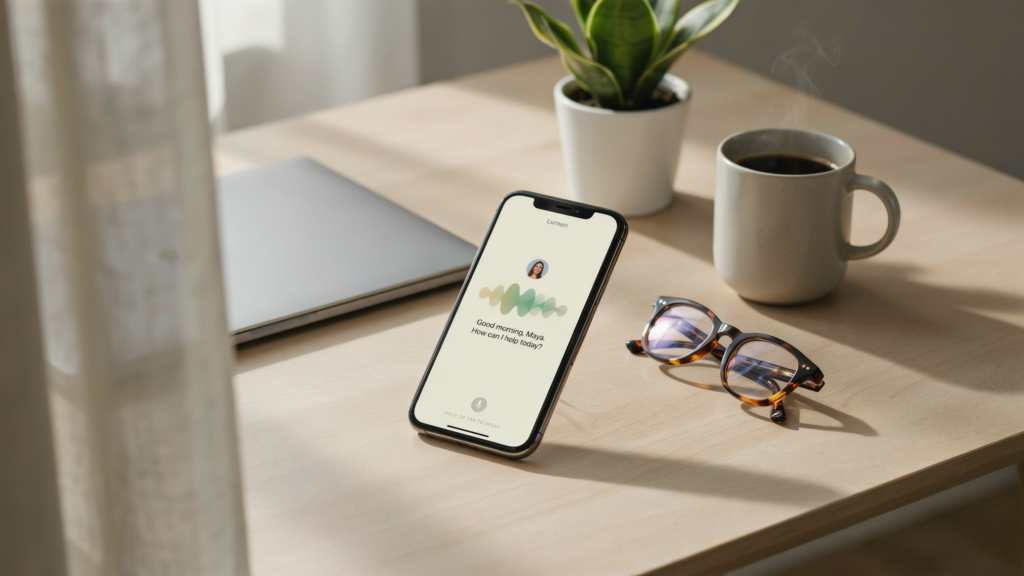
And the AI landscape is evolving quickly: massive, centralized cloud databases are quickly being replaced by highly personalised local-first environments. As such, we move vibrantly into the digital age claudia artificial intelligence is becoming an attractive option for those who want to keep privacy than tailored. This approach to an AI assistant design is fundamentally different: one that closes the gap between strong machine learning and strict user privacy. While reams of people will write broadly about traditional AI chatbots that forces you to VNC into remote servers and hand over the conversational history, modern personal agents are doing something way different than what we think. This change lets users leverage advanced automation without having to forfeit any of their commercial or personal data.
Over the years, we as users have made a Faustian pact with corporations: those who were willing to give up some level of privacy in exchange for state-of-the-art software would leave their private thoughts, queries, and codebases to be analyzed, stored and trained upon by machine learning[1]. But as AI becomes plugged into every aspect of everyday life — from writing emails to constructing complex software pipelines — this trade-off is harder and harder to defend against. A new class of digital tools that are focused on user agency is requested by users.
Introduction to the Philosophy Behind Claudia
So what exactly is the unique feature of claudia artificial intelligence, and in order to understand that you have to look where people start actually getting worried about data privacy. Given that more or less all significant AI developers train their designs using user inputs, every sensitive document, creative draft or personal search query you enter-in could be ultimately fed in to a training set. The combination of this practice has fomented enormous demand for “bring-your-own-key” (BYOK) architectures. Which allows users to use cutting edge neural networks with no intermediaries logging their activities by decoupling the interface from the underlying model.
Its not merely a secret keeper, this is a new philosophical model of owning your digital twin. An AI assistant that has memory stored locally with you instead of some corporate server in a far away land where trust is required, creates an invisible fortress[2]. Instead of seeing productivity tools in between our daily routines, it enables a more straightforward, practical and unfiltered interaction with technology instead.
How Personal AI is Moving Beyond Central Clouds
Back in the early days of generative AI, cloud was the option because you needed supercomputing power for running large neural networks. Now, though, developer teams like claudia artificial intelligence can utilize edge computing and optimized local databases to create better solutions that are designed with the ability of run natively on consumer devices. That evolution enables your personal assistant to have long-term memory, remember previous interactions, and perform complex reasoning without sending you raw audio or chat files to a 3rd server.
There are many inherently different advantages of building this model in a decentralized way rather than in legacy cloud systems:
Zero Data Retention Policies — as there is no single server in the middle ground here, your conversational data cannot be intercepted or sold or used for training other commercial models.
Less Overhead Cost: With using your own API keys, you only have to pay for the tokens you actually use, no written in stone monthly subscription premium.
Customizable Brains: You’re not tied up with only one provider. This can be aAnthropic, OpenAI, Google Gemini and open-source models depending on the specific task.
Reclaiming User Control in the Age of Machines
It is important to remember that Tech-pun intended — tech has to work for the user, not exploit the user. Claudia artificial intelligence has arisen in direct response to the monetization of personal data. It sets a new standard for ethical software by putting the keys to their data vaults in users’ hands. While you still think about data leaks, algorithmic bias, and forced subscriptions when you wholly control your API endpoints and local keychains, these fears start to diminish.
This degree of control also creates a perfect incubator for ongoing learning. In a world free of corporate surveillance paranoia, users can send their assistants sensitive workflows, proprietary source code and deeply personal journals. The AI becomes a custom-tailored extension of 1 of your 24092 fleshy smartphones, rather than just some generic corporate chatbot.
This is Claudia: GUI for Developers vs Assistant with Privacy in Mind
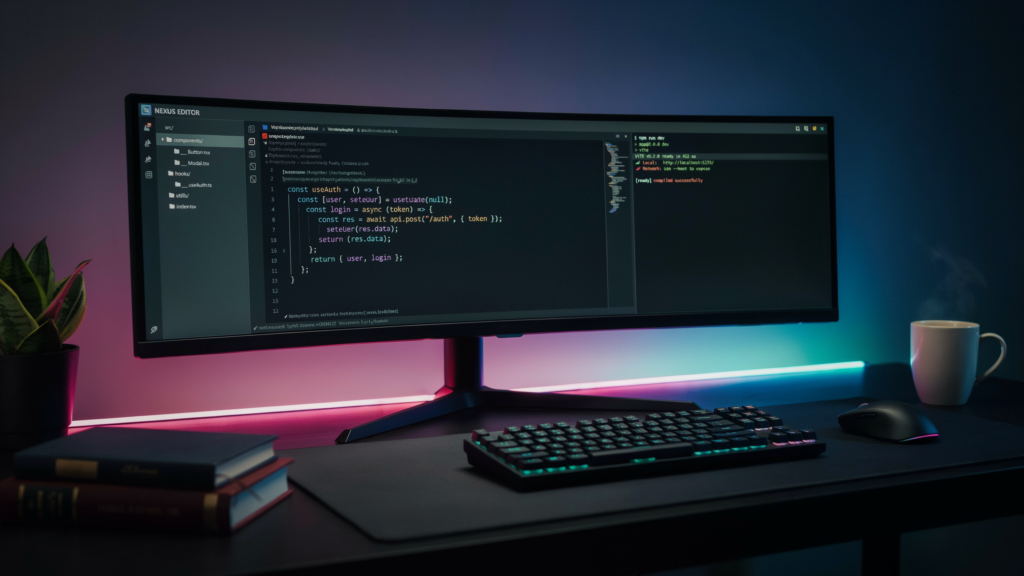
User needs are changing as artificial intelligence continues to mature. No more simply a generic web interface, something that works for a software engineer building an enterprise application, the average user who just needs a quiet space to go organize your thoughts with some security. In response to these differing requirements, the idea of claudia artificial intelligence has now manifested in two main forms: A sophisticated graphical user interface (GUI) added on top of developer tools as well as a voice-enabled assistant designed for more casual daily use on mobile.
This paradigm demonstrates that AI need not be a corporate, one-size-fits-all experience by addressing both ends of the user spectrum. Instead, it can be adapted to a variety of workflows, operating systems and privacy requirements, with the user firmly in the driver’s seat throughout.
The Developer’s Choice Wrapping there CLI tools around a GUI
Command-line Interfaces (CLIs) are super powerful for software developers, but sometimes fall short of the intuitive navigation needed for complex multi-file edits. Introduction The rise of claudia artificial intelligence & nature of designer tools for developers have changed the way engineers and terminal-based agentic tools like Claude Code. Developers can now use an open-source graphical interface rather than typing repetitive terminal commands for viewing file trees or managing git histories.
The visual wrapper provides a powerful workspace for developers to be able to directly manage Agentic coding workflows. Key features include:
Visual File Trees: Quickly browse, choose and feed specific individual files or whole directories directly to an AI’s context window.
Integrated Model Context Protocol (MCP)–Connect external developer databases, local testing environments, and APIs to the visual agent
Visualize changes: Track how code suggestions are made by the AI, so you can either reject or accept edits line by line with one click.
We took out the friction of text-only terminals and made it easier for developers to create software faster without losing full control over their code base.
An Everyday Assistant, Nature-Friendly, Voice AI and On-Device Memory
But for non-developers, claudia artificial intelligence takes the form of a simple mobile application with everything stripped down to a cleaner and more minimalist version on your smartphone evading the daily task distraction that all cloud platforms provide. Designed with a “calm technology” ethos, this smartphone companion feature is free from notifications, corporate ads, or algorithmic feeds. Rather, it gives you an understated interface for text or live voice conversations.
The mobile assistant is most distinguished by its emphasis on on-device memory. Instead of being stored in a distant cloud database that could potentially be exposed due to vulnerabilities, your previous conversations are encrypted and kept on your own device. Now, if you ask the assistant for a book suggestion or grocery list you provided three weeks ago, this local database gets accessed. This architecture protects the core of your life from prying eyes, while allowing the contextual intelligence you’ve come to expect in modern digital assistants.
The Bring-Your-Own-Key (BYOK) Revolution
The biggest innovation this decentralized ecosystem provides is financial transparency. Commercial AI platforms usually lock you into a fixed monthly subscription where the provider charges the same amount of 100% active business whether you use their service every day or once per week. With a BYOK model, claudia AI charges users fractions of a cent per prompt, paid directly to the model provider chosen by the user.
It means advanced AI is accessible and affordable for everyone. No longer do users have to pay for compute power for machines that are not being really utilized. Instead, they receive a straightforward go-with-the-flow experience that can be paused or adjusted at any stage of the process.
Integrate Easily with Anthropic, OpenAI, and Local Models
These applications run their model independently of any particular model hosting provider which allows them the flexibility to achieve unprecedented results. This is sustained in the interface where users can generate their own API keys from Anthropic (Claude Sonnet), OpenAI (GPT-4o), Google (Gemini) or xAI (Grok) and type it directly into the interface.
In addition, power users can plug these interfaces into local model servers that have been deployed with open-source models like Llama or Mistral. Essentially. this means your personal assistant is not locked into a single technology, so you can use the best tool for the job. If you use one model for deep logical reasoning, another for creative writing style, or a locally hosted database that has absolute offline security, the switch is trivial.
Building Your Own Private Ecosystem A Step By Step Guide

Moving from a centralized cloud-based AI service to a private decoupled ecosystem can serve as an alarming jump at first. But in the modern era, this is easier than ever before thanks to cloud services and there are many levels available from the most manual of development to a simple mobile interface with which anyone who knows anything about building an app or computer software can manage. Establishing a secure, tailored setup takes only a few minutes and gives full control over your interactions and costs.
STEPSTO GENERATE AND SECURE YOUR API KEYS
Step 1: Get Your API Key First thing you will need to do while setting up claudia artificial intelligence is getting an API key from a model provider. In case you would like to use Claude models from Anthropic, you can get an Anthropic Developer Console account here. Same thing with OpenAI, you need to register in the OpenAI platform and go to the API keys part.
Now navigate to your individual developer console where you can create a unique key. You want to treat this key as securely as a master password would be treated. Do not share to anyone, or upload in public places. It then safely saves this key in your MacOS or Windows safe/restricted keychain/encrypted system directory and will never transmit your secret key up to a server apart from the direct API endpoint of whichever provider end-result you are working with.
How to Run the Claudia Interface on Desktop/Mobile
Configuring claudia artificial intelligence to your favorite platform is fairly easy as it only takes a moment of adjustment. Desktop developers who want to take advantage of the open-source graphical user interface for terminal tools clone from repos like GitHub and run a small build script. After you compile, the app is simple to open, go to your settings panel and paste in the keys.
Even simpler for mobile users looking for a silent personal assistant on iOS. Simply download the application from the App Store, open it and enter your keys in the setup assistant. From the get-go, your interface sets up a local database and turns on voice out of the box plus text modules to give you an instant AI work area that even fires up and runs from your computer with high security.
Claudia vs Traditional Centralized AI Subscription
Using centralized platforms is traditional and comparing them to claudia artificial intelligence shows the differences in autonomy of users. B. Subscription Only Models: Traditional services are based on the subscription-only business model. You shell out a flat twenty bucks a month to access the online interface, whether you use it daily or infrequently. Although this is convenient for heavy users, it comes with significant trade-offs — in data privacy, feature limitations and financial burden.
Feature Comparison
Centralized AI Services
Claudia-Style Ecosystem
Data Privacy
Cloud storage, potential model training
Strictly local database, encrypted
Pricing Model
Flat $20/month subscription
Pay-per-token (BYOK), highly scalable
Model Selection
Restricted to the host provider
Toggle between Anthropic, OpenAI, xAI, etc.
Rate Limits
Leaked pricing from leasing companies has also suggested a strong word: caps on premium models by the hour
An increasingly flexible structure around APIs limits based on developer tier
The True Cost of Subscriptions at $20/Month
For example, many light users are billed a flat monthly fee for use of AI tools yet send as little as 30-50 prompts/week. The flat rate is very inefficient for these users. With a direct API approach, you simply pay for the text generation done. If you can get away for a week or two and aren’t running the tool, your cost is literally zero.
This cost-efficiency is one of the major forms which have developers and even casual users sliding over claudia artificial thoughts. Which means you are getting intelligence at the raw, wholesale cost by bypassing standard markup fees charged by software middleman companies. This, for an average casual user can take the monthly cost from twenty dollars to a couple of cents.
Use of rate limits and unfettered access
The other hidden limitation of classic web interfaces are the strict rate limits. Paid users still encounter limits like, say, forty messages per three hours. The ceiling can break your flow right when you are in the middle of a complicated programming session or writing an extensive report.
Claudia artificial intelligence allows you to get direct API access and bypass the limits of a web interface, which tends to have much more generous rate limits. You can process upwards of hundreds of thousands of words a minute, without interruption depending on your developer account tier with the model providers. This gets us ever closer to a personal assistant who can help you, no matter how extensive your project grows as well as demanding.
How you see the future of Decentralized Intelligence and Privacy
When you look out across the horizon, the adoption of claudia artificial intelligence is much more than just a short-lived technological blip. It points to a basic change in the relationship of humanity with automation. With machine learning models becoming part of our workplace pipelines and everyday lives, the question of who gets to take ownership over our data, control over our preferences, and the profits made off the prompts we feed into these models is more relevant now than ever.
The decentralized software movement is indicating that powerful systems can have a place in the society built by constructing applications with privacy as a baseline—or at least as an option rather than a public afterthought. This method allows users to take advantage of state-of-the-art technology while preserving their private information.
Moving Toward Edge & On-Device Models
The low-key digital metamorphosis of personal computing technology. Modern consumer hardware ships with dedicated NPUs (Neural Processing Units) to run complex maths operations locally. The architectural underpinnings of claudia AI map precisely onto this transition
As local hardware gets more powerful the need for colossal server farms is declining, and as such applications leveraging claudia artificial intelligence are finding favour with privacy advocates. Over the next few years, voice commands, deep file indexing, and reasoning patterns will be executed locally on your phone or laptop in local-first architectures. Such change will allow AI tools to become speedy, completely offline, and immune from any outside security incursion.
Hopes, Insights: Autonomy in a hyper-connected world

However, it all starts with the tools you choose; claiming control over your data means choosing those that respect digital boundaries and claudi a.i. is just one of such options. Pre-configured, centralised web interfaces are great for convenience but require a constant state of surveillance and unpredictable monthly costs.
Spending just a few minutes to connect your own API and local keys — means you will always be the true owner of your intellectual property when it comes pear-to-pear using claudia artificial intelligence. Whether you are a developer looking for an up-to-date, light wrapper to speed up your coding workflow or a person looking for assistance with daily tasks that tend to become such repetitive pain points in our lives — Going the Decentralized route is a move towards a more secure digital world.
Frequently Asked Questions (FAQ)
Claudia AI — What are the main advantages of it?
This avoids all the unnecessary pros and cons of other methods and gives you the biggest one be privacy data completo control. It leverages a “bring-your-own-key” (BYOK) solution that keeps your data safe, and never used to train outside public models.
Can I configure it without programming knowledge?
The GUI wrapper for those coding terminals are aimed toward developers who have basic tech skills (coz duh) while the personal assistant mobile app is designed to be as easy-to-use as possible and ready in less than 10 minutes.
Is my API key secure if I enter it on the interface?
Yes. Your API keys are storing in the secure keychain of your device. These are never passed on to any 3rd party servers, apart from the immediate API endpoints of your chosen model provider.
Can we use this setup to run open-source models offline?
The more advanced users can wire up the visual interfaces to run against local model servers running open-source models (like Llama) making it even fully offline and requiring no internet connection with all setups that run fully locally highly secure