
Demystifying Kit Artificial Intelligence: A Hands-On Path to Tomorrow’s Technology
The world of technology is moving at a breakneck speed, and at the heart of this acceleration is artificial intelligence[1]. For years, AI was confined to the high-performance computing labs of massive tech giants and academic institutions. Regular developers, students, and hobbyists could only interact with it through APIs or complex, screen-bound code repositories. However, a major shift is happening right now. We are moving away from purely virtual simulations and stepping into the physical space where hardware meets software.
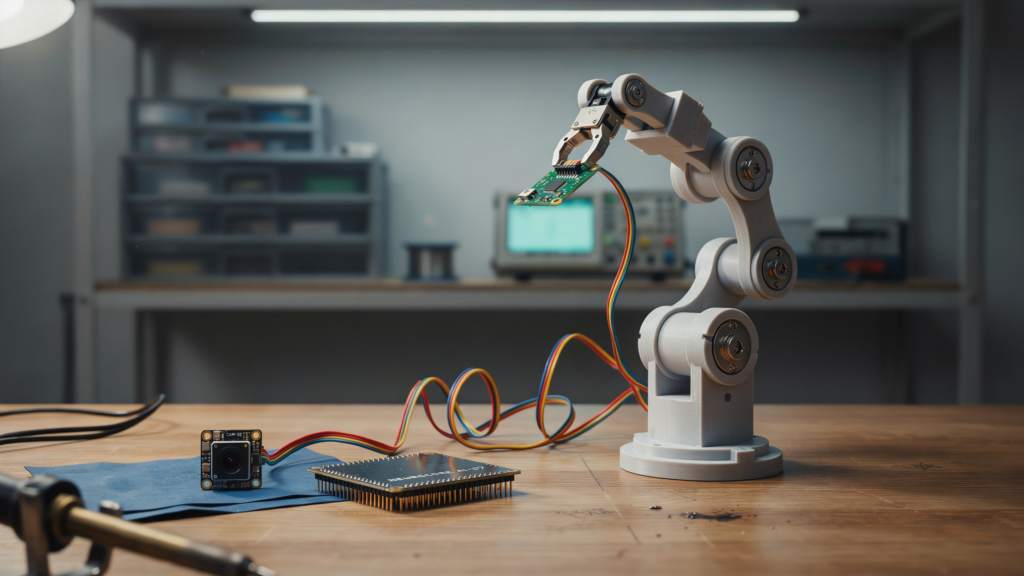
When you begin experimenting with a beginner-friendly kit, artificial intelligence starts to make real, practical sense[2]. It bridges the gap between lines of code and physical action[3]. Instead of just reading about how a machine learns to recognize objects, you can actually build a small robotic arm or a smart camera that does it right in front of your eyes[2][4]. This hands-on approach is not just a trend; it is the future of interactive learning, intuitive problem-solving, and rapid prototyping.
Why Hands-On Learning Beats Pure Theory
There is a distinct difference between understanding a concept intellectually and watching it function in the real world[3]. Many aspiring engineers spend months reading textbooks about convolutional neural networks (CNNs) and supervised learning. Yet, when they try to deploy a model onto a physical device, they face unexpected real-world challenges like lighting variations, physical latency, and limited processing power.
This is where physical development tools come into play. By unboxing your first hardware-focused kit, artificial intelligence moves from an abstract line of code to an active, problem-solving system[2][3]. You learn how to optimize code for edge devices—small, low-power computers—rather than relying on massive cloud servers. You begin to understand the constraints of physical sensors, the noise in camera feeds, and the mechanical delays in motors[2].
Moreover, building something physical creates a feedback loop that dramatically speeds up learning[3]. When your DIY smart vehicle successfully avoids an obstacle because of a neural network you trained, the sense of accomplishment is unmatched. It turns frustrating debugging sessions into satisfying puzzles, paving a much smoother learning curve for both children and seasoned software developers looking to pivot their careers.
The Convergence of Hardware and Neural Networks
Modern AI does not exist in a vacuum; it requires processing power, sensory inputs, and physical outputs to interact with our world. In the past, running machine learning models required bulky, power-hungry desktop computers with expensive graphics cards. Today, microcontrollers and single-board computers have evolved to a point where they can run optimized machine learning models locally.
This technological evolution has paved the way for accessible development packages. If you choose an advanced development kit, artificial intelligence model training can be done locally on your own desk. Tiny chips now feature dedicated hardware accelerators designed specifically to handle the complex mathematical matrix multiplications that power deep learning models.
By combining physical sensors (such as wide-angle camera modules, multi-array microphones, and distance sensors) with these specialized microchips, creators can build systems that sense and react in real-time. This synergy of hardware and neural networks is the foundation of modern robotics, smart home automation, and autonomous industrial systems.
Transforming Classrooms and Maker Spaces
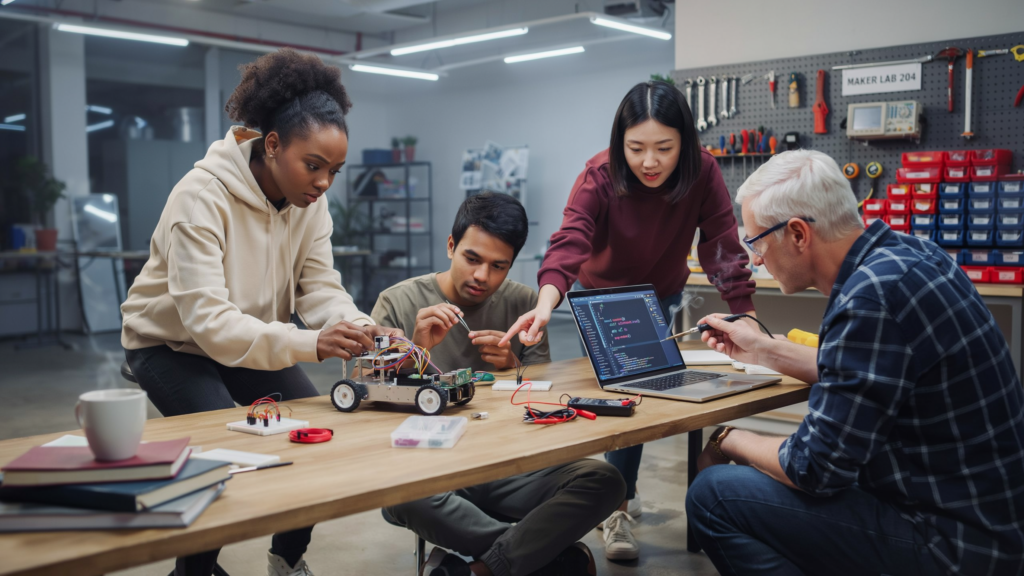
Education is undergoing a dramatic transformation[5]. Rote memorization is taking a backseat to project-based learning[6]. Educators worldwide are realizing that the best way to prepare the next generation for an AI-driven workforce is to let them build, break, and rebuild[5][7].
With an educational kit, artificial intelligence concepts like computer vision and neural pathways become incredibly tangible for middle school, high school, and university students[3][8]. Instead of staring at dry slideshows, students can collaborate on building smart recycling bins that sort trash automatically or voice-activated locks that only open for specific individuals[4][9].
These maker-space projects foster critical thinking, collaborative problem-solving, and cross-disciplinary skills[3]. A single project forces a student to dabble in mechanical design, electrical wiring, software programming, and data science. It democratizes technology, proving that you do not need a PhD in computer science to start building smart systems that can think, learn, and adapt.
Exploring Different Types of AI Kits Available Today
As the field of machine learning expands, it is no longer a one-size-fits-all discipline. The technology now ranges from simple speech recognition in smart home appliances to complex visual inspection in heavy manufacturing. Consequently, the hardware market has diversified to meet these varied demands. Understanding the different categories of kits available is essential to choosing the right tool for your learning or development goals.
When shopping for a developer kit, artificial intelligence capabilities are often the primary selling point. Depending on your technical background and what you wish to build, these kits generally fall into three primary categories: educational packages, specialized developer boards, and complete robotic kits.
Educational and STEM-Focused Packages
For educators, parents, and absolute beginners, STEM (Science, Technology, Engineering, and Mathematics) kits are the perfect starting point. These kits focus heavily on user-friendly software interfaces and simplified hardware connections. Instead of writing complex C++ or Python code from scratch, users often interact with drag-and-drop programming environments like Scratch or Blockly.
These entry-level kits introduce basic concepts like image classification (teaching a camera to recognize a hand gesture) and audio recognition (triggering an action when a specific word is spoken). They usually feature plastic or cardboard chassis, making them safe and highly accessible for classrooms. The primary goal here is not to build production-ready systems, but to demystify how algorithms work and spark curiosity in younger learners.
Prototyping Boards and Developer Kits
If you are an engineer, computer science student, or software developer looking to build real-world applications, you need more processing power and lower-level access to code. Developer boards are designed exactly for this purpose. Unlike educational kits, these boards do not always come with flashy chassis or pre-assembled parts. Instead, they provide a bare-circuit board equipped with a powerful processor, GPIO (General Purpose Input/Output) pins, and various ports for external sensors.
These platforms allow developers to build and run deep learning frameworks like TensorFlow Lite, PyTorch, and ONNX directly on the device. They are excellent for prototyping smart security systems, industrial monitoring equipment, and remote environmental sensors. They demand a solid understanding of Linux environments, Python scripting, and data science fundamentals, but they offer unmatched flexibility.
Robotic and Autonomous Vehicle Kits
For those fascinated by motion, robotic kits combine the brainpower of machine learning with mechanical engineering. These packages often contain multi-jointed robotic arms, balance-sensitive bi-pedal robots, or four-wheeled scale model cars.
With an out-of-the-box robotic kit, artificial intelligence algorithms can be tested almost immediately in physical environments. For example, instead of running a self-driving car simulation on a computer screen, you can deploy a lane-tracking neural network directly onto a physical scale model. Watching a physical device navigate around furniture, dynamically mapping its surroundings using LiDAR or stereoscopic cameras, provides invaluable lessons in control theory, sensor fusion, and spatial mathematics.
Key Components Inside a Modern AI Kit
To understand how these systems process complex data without relying on massive server farms, we must look under the hood. While every package is tailored for a specific audience, the underlying anatomy remains remarkably consistent.
Inside a high-quality kit, artificial intelligence hardware components typically consist of a microcontroller, camera, and sensors. Let’s break down the essential components that make these devices work seamlessly together.
The Processing Core
The brain of any AI kit is its processing unit. Depending on the complexity of the tasks, this can range from a simple microcontroller to a sophisticated system-on-chip (SoC).
- Microcontrollers (MCUs): These are low-power, inexpensive chips designed for simple, repetitive tasks. Thanks to advancements in “TinyML” (Tiny Machine Learning), highly optimized networks can now run on these tiny microchips, allowing them to detect keywords or recognize basic gestures while consuming minimal power.
- Single Board Computers (SBCs): For heavier tasks like real-time object detection or complex pathfinding, single-board computers are used. These devices run full operating systems (like Ubuntu) and often include dedicated NPUs (Neural Processing Units) or TPUs (Tensor Processing Units) designed specifically to handle heavy mathematical computations.
For professionals designing a specialized sensor kit, artificial intelligence workloads are handled by edge-computing chips. These chips are specifically optimized to minimize battery consumption while maximizing mathematical processing speed.
Sensory Inputs
An intelligent system needs to perceive its environment before it can make decisions. This is done through various input modules:
- Camera Modules: Visual data is incredibly rich. High-definition cameras, sometimes equipped with global shutters or infrared night vision, allow systems to perform real-time facial recognition, object tracking, and optical character recognition.
- Microphone Arrays: Multi-directional microphones capture audio, which is then processed to filter out background noise, detect voice commands, or identify anomalous sounds like breaking glass.
- Inertial Measurement Units (IMUs): These sensors measure acceleration, gravity, and orientation, helping mobile robots maintain balance and track their position in space.
Actuators and Output Modules
Once the system has processed the sensory data, it must react. This is where actuators come in. Servomotors rotate joints, motor drivers spin wheels, and speakers or displays provide feedback to the user. A smart camera might identify an authorized face and signal an electronic lock (actuator) to open, turning abstract visual analysis into concrete physical action.
Setting Up Your First AI Project: Step-by-Step
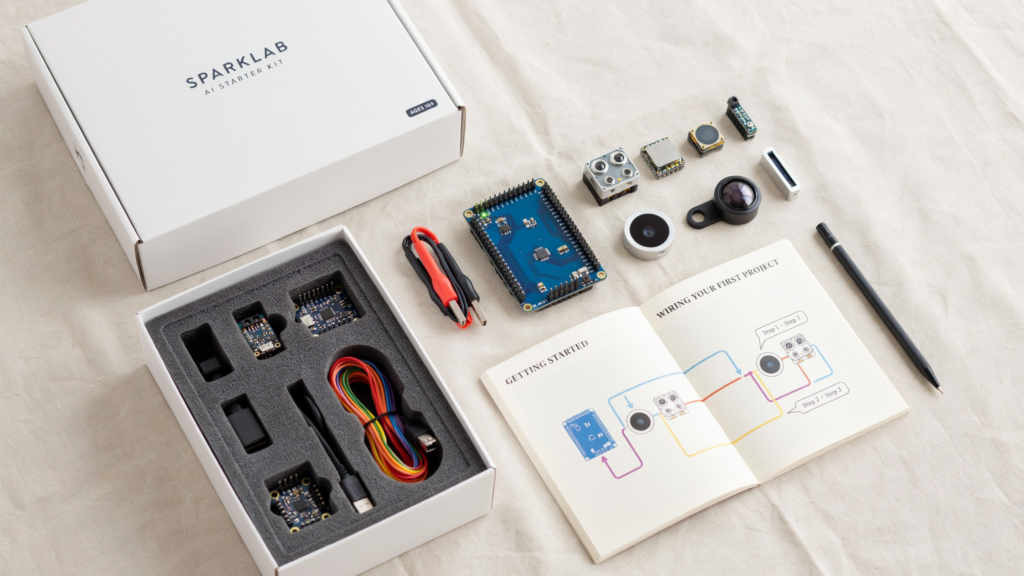
Unboxing a brand-new development kit is always exciting. However, once all the components are laid out on your desk, the question arises: “Where do I start?” Building a physical machine learning project involves a systematic workflow that is quite different from traditional software programming. Traditional software relies on explicit, step-by-step rules written by a programmer. In contrast, artificial intelligence relies on feeding data to a model and letting it discover the rules itself.
Whether assembling a simple robotic kit, artificial intelligence learning is significantly accelerated through active experimentation rather than passive reading. Let us break down the standard workflow required to bring your first physical project to life.
Step 1: Defining the Problem and Gathering Data
Every great project starts with a clear objective. Are you trying to identify whether your pet cat is at the backdoor? Or do you want to build a system that detects when a plant needs watering? Once the goal is defined, the first and most critical step is data collection.
If your project involves visual recognition, you will need to take dozens, or preferably hundreds, of photos. For example, if you are building a smart pet door, you will need images of your cat from various angles, under different lighting conditions, and even in different weather. The quality of your data directly dictates the performance of your final model. If you train a model using only perfectly lit, high-resolution photos, it will likely fail on a rainy or cloudy evening.
Step 2: Preparing and Cleaning Your Dataset
Once you have gathered raw images or audio recordings, the next step is preparation. This involves resizing images to fit the inputs of your neural network, converting raw audio into spectrograms (visual representations of sound frequencies), and labeling your data.
Labeling means telling the computer what each data point represents. You will categorize your photos into folders, such as “Cat Present” and “Empty Doorway.” By organizing your dataset carefully, you ensure the training process is accurate and efficient.
Step 3: Model Selection and Training
You do not need to design a neural network from scratch. For most hardware kits, pre-trained models are readily available. These are models that have already been trained on massive datasets (like ImageNet) and can recognize general shapes, colors, and patterns.
By using a technique called “transfer learning,” you can take these pre-trained models and fine-tune them using your small, custom dataset. This process requires significantly less computing power and can often be completed in just a few minutes on a standard laptop. Once training is complete, the model is exported as a lightweight file (such as a .tflite file) designed to run efficiently on edge hardware.
Essential Software Frameworks and Libraries
To make physical hardware interact seamlessly with machine learning models, you need the right software stack. Fortunately, the open-source community has developed incredibly robust libraries that simplify this process.
By leveraging a custom-built kit, artificial intelligence projects can easily adapt to specific environmental requirements, such as outdoor weather monitoring or low-light factory floors. The software tools you use will define how easily you can make these adaptations.
TensorFlow Lite is a lightweight version of Google’s famous machine learning framework. It is specifically designed to run on mobile devices, single-board computers, and microcontrollers. When working with an advanced kit, artificial intelligence developers must pay close attention to model optimization and pruning to fit limited system memory. TensorFlow Lite provides tools to shrink models through “quantization,” which reduces the mathematical precision of the model’s weights without significantly hurting its overall accuracy. This allows complex neural networks to run smoothly on hardware with less than a megabyte of RAM.
OpenCV (Open Source Computer Vision)
If your project involves a camera, OpenCV is an indispensable tool. It is an open-source library that provides thousands of optimized algorithms for image processing. While a neural network is great at recognizing what is in an image, OpenCV is excellent at preparing the image first. It can crop faces, adjust contrast, detect edges, and track moving objects before passing the cleaned-up image to your AI model, saving massive amounts of processing power.
Edge Impulse
For those who want to avoid complex terminal commands, Edge Impulse has revolutionized the TinyML workspace. It provides a web-based, highly visual platform where you can collect data directly from your hardware kit, train models in the cloud, and export fully optimized C++ code with a single click. It completely bridges the gap between hardware sensors and machine learning algorithms, making it a favorite tool among hobbyists and enterprise developers alike.
Real-World Applications You Can Build at Home
The sheer versatility of these development packages means you are only limited by your imagination. Here are a few highly practical, rewarding projects that you can build right on your workbench:
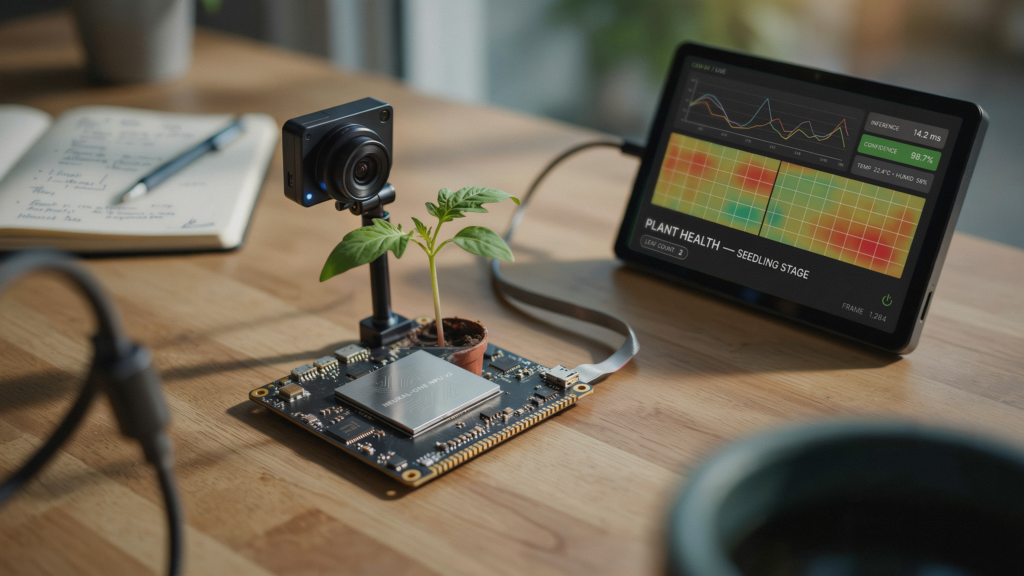
- Smart Plant Monitor: Use a moisture sensor and a camera to monitor your house plants. The system can learn to detect early signs of leaf discoloration or wilting and send a notification to your phone before the plant actually dies.
- Intelligent Mailbox: Place a tiny camera inside your mailbox. Using a local image classifier, the system can instantly identify if you have received a letter, a package, or junk flyers, notifying you exactly what was delivered.
- Hand-Gesture Home Controller: Connect a camera module to your smart home system. You can train a model to recognize custom hand gestures to dim the lights, play music, or lock your doors.
Using an interactive voice-controlled kit, artificial intelligence models can process raw audio signals locally without requiring a persistent internet connection, ensuring your voice commands remain completely private and secure.
Navigating the Challenges of Physical AI Development
While building physical machine learning projects is highly rewarding, it does not come without hurdles. Unlike writing pure software, physical computing introduces variables that you cannot always control. Understanding these challenges beforehand will save you hours of debugging and help you design more resilient systems.
When choosing a specialized kit, artificial intelligence projects must be designed to withstand real-world environments. Let us look at the most common obstacles builders face and how to overcome them.
Hardware Constraints and Memory Management
On-device machine learning, often referred to as edge computing, is constrained by physical hardware limitations. Unlike massive cloud databases, a microcontroller might only have 256 kilobytes of RAM.
To make your models fit on these small chips, you must employ optimization techniques. This includes reducing the input size of your images (for instance, shrinking a 1080p photo to a mere 96×96 pixels before processing) and using post-training quantization. By deploying a comprehensive kit, artificial intelligence workflows can be optimized directly at the hardware layer, ensuring that your algorithms run at high speeds without overheating the chip or draining the battery.
Environmental Variability and Data Drift
One of the most common frustrations for beginners is when a model works perfectly on their desk but fails completely when placed outdoors. This is usually due to variations in lighting, background noise, or physical placement.
For example, a camera sensor trained to recognize a hand gesture in a brightly lit room might fail under low incandescent light. To solve this, your training dataset must be as diverse as possible. Include images taken at night, during the day, with shadows, and from different angles. The more diverse your training data, the more robust and reliable your physical system will be.
The Future of Hands-On AI: What’s Next?
The landscape of on-device processing is shifting rapidly. What once required a complex server cluster can now be done on a chip smaller than a postage stamp. As we look ahead, several trends are poised to make hands-on learning even more powerful.
With a well-chosen kit, artificial intelligence systems can operate fully offline, maintaining security and speed. In the coming years, we can expect to see:
- Neuromorphic Chips: Microprocessors designed to mimic the human brain’s physical structure, allowing for ultra-low-power neural computations.
- No-Code Training Tools: Increasingly intuitive visual interfaces that will allow people with absolutely zero programming background to build, train, and deploy custom neural networks.
- Affordable Multisensor Arrays: Integrated hardware packages containing gesture sensors, thermal imagers, and gas detectors, allowing for incredibly rich environmental analysis.
As you select your preferred kit, artificial intelligence implementation becomes a structured journey. It starts with simple curiosity and evolves into building fully functional, autonomous solutions that can improve our daily lives.
Through a versatile development kit, artificial intelligence tools can adapt to endless creative projects, encouraging continuous learning and exploration. By starting with a simple kit, artificial intelligence education is unlocked for anyone with curiosity, a laptop, and the desire to build the technology of tomorrow.
Frequently Asked Questions (FAQ)
Q1: Do I need strong coding skills to start using an AI kit?
No, absolute beginners can start with educational kits that utilize block-based programming (such as Scratch) or web-based training tools like Edge Impulse, where no coding is required to train and deploy basic models.
Q2: Can these hardware kits run offline?
Yes, many modern kits are specifically designed for “Edge AI,” meaning the trained machine learning model runs directly on the physical hardware without requiring any internet connection.
Q3: What programming languages are most commonly used?
Python is the most popular language for development and prototyping due to its vast library support, while C++ is commonly used for resource-constrained microcontrollers to maximize processing efficiency.
Q4: Is it safe for children to learn AI with these tools?
Absolutely. Educational STEM-focused kits are designed with safety in mind, using low-voltage USB power and visual blocks to make learning both safe and intuitive for young minds.