
The Evolution of Private AI: Protecting Your Battle Plan for The Future of Enterprise Data

private artificial intelligence; Currently, the world of business is going through one of the fastest transitions driven by technology in history. AI has moved from a distant idea to a routine operation. Organizations across the globe are employing machine learning and large language models to automate workflows, analyze complex datasets and generate unprecedented-scale content. But this new gold rush has also revealed a great weakness—data privacy.
Feeding proprietary source code, sensitive financial records, or customer information into public-facing AI tools means your data often becomes part of the public domain and is almost surely used to train future iterations. This is a huge risk for enterprises that care about intellectual property. This without jeopardising the competitive difference that machine learning provides is where private AI comes into play as the solution of choice.
Private Artificial Intelligence — What is it?
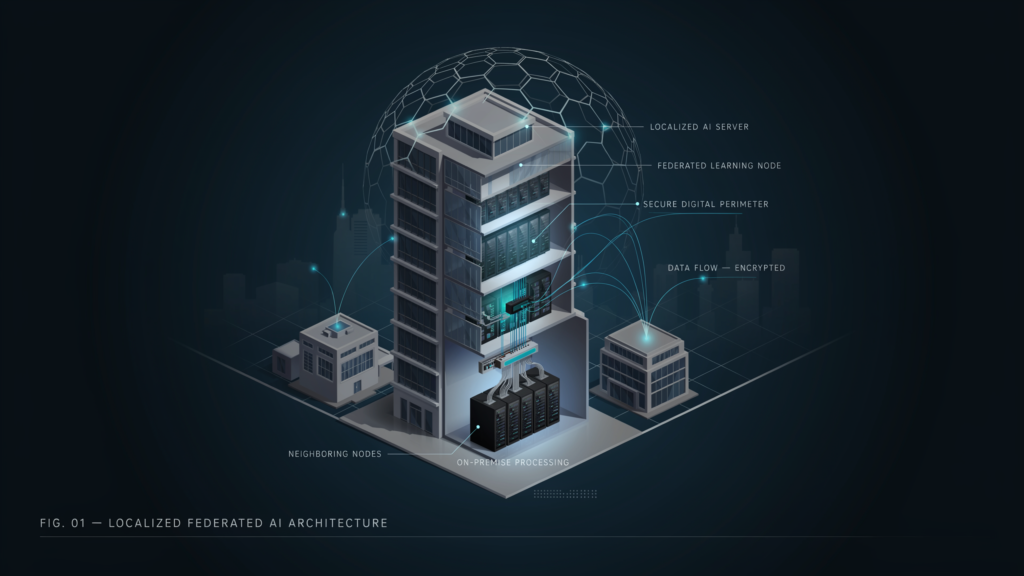
So, to understand why has this technology created a stir let us first try to define what it really is. In simple terms, private artificial intelligence is an AI paradigm where the training data, model parameters and outputs are limited to a secure controlled ecosystem. In contrast to public AI models that process user prompts on external servers, typically owned by third-party tech giants, a private system functions entirely within the confines of an organizationsa own secure cloud infrastructure (or sometimes an on-premise datacenter or even a dedicated, isolated partition of a cloud provider).
The difference between the two is essentially in how data is owned and leveraged. ChatGPT is probably the first experience where when you communicate with a public AI model, your inputs are commonly collected to enhance the accuracy of that particular model overtime. Private AI trainsthat models globally, but instead keep everything local or tightly controlled means your inputs are never used to train global public models. Just as importantly, the insight produced stays 100% with you so that you can leverage all available modern AI brainpower without the risk of data loss, corporate espionage or worse yet being used to drive up bid prices (your competition).
At the heart of this system are principles of rigorous data governance. This means that only users who are authorized have access to the models and data operated with them. In areas like healthcare, finance and legal services where data grossly sensitive this structure becomes less an option and more a necessity.
The Rise of Private AI: What This Change Is Economically Driven By
This transformation from public cloud-based AI to localized; secure systems has not happened overnight. There are multiple market forces, regulatory pressures, and security incidents converging to convince organizations that public models come with trade-offs. This leads directly into the key reasons why companies are switching to private artificial intelligence so aggressively.
The Weakness of Open Access Public AI Models
When the generative AI boom was still in its infancy, a lot of organizations had a use first, ask questions later approach. AI assistants were seamlessly brought into the workflow of employees in order to draft emails, debug code and forecast market trends. Sadly, this resulted in several high visibility data breaches. Even proprietary source code and confidential corporate strategies was publicly displayed because people did not used to know that their chats were stored and analyzed. When a public neural network absorbs data, retrieving or deleting it is incredibly difficult.
Stringent Global Data Laws.clearOption
The world over, governments are tightening the noose on how personal data is processed. Data privacy regulations such as the General Data Protection Regulation (GDPR) in the EU, California Consumer Privacy Act (CCPA), and medical data protection legislation (HIPAA in United States for instance) are heavy on penalties for mishandling sensitive information. Building on a private AI architecture gives companies the ability to adhere to these strict laws as the data never flows across any geographical or organization boundary without clear maturity, consent and end-to-end encryption.
Date: Preserve Intellectual Property (IP)
Intellectual property is the high-stakes currency for tech companies, pharmaceutical firms and creative industries. The same can apply if a business designer leverages a public AI tool to create the design of a new drug compound or writes an algorithm for proprietary software. In a private setting, the uniqueness of insights gained, custom training data used and models built remain company IPs protecting the competitive advantage in the market place.
How Private AI Works in Reality
Understanding how this works under the hood demystifies how it can keep data confidential, while providing bleeding edge performance. Public AI models depend upon sending data repeatedly to an external server while private artificial intelligence works off a fundamentally different architectural ideology. It pulls the model closer to the data instead of pushing the data across to an actual model.
This type of isolation and security is achieved with a wide range of advanced computing technologies and frameworks.
The simplest solution is to host the AI model on an organization’s own physical servers or in a private cloud environment (for example, as an isolated virtual private cloud (VPC) instance on AWS, Azure, GCP etc). This allows data not to be lost when in an organizations secure boundary. Just like any other business critical database, the system is protected by firewalls, intrusion detection systems, and strict access controls.
Hence in topologies, limiting where the raw data resides is required while corporations practice models on multiple workplaces or devices. Federated learning addresses this challenge by training the AI model locally on personal devices or regional servers. Only learned parameters (updates of “insights” once all local models finish training) are transmitted to the central server that aggregates these results to improve the master model running on a distributed architecture. The raw, sensitive data is never transmitted anywhere and this is extremely secure.
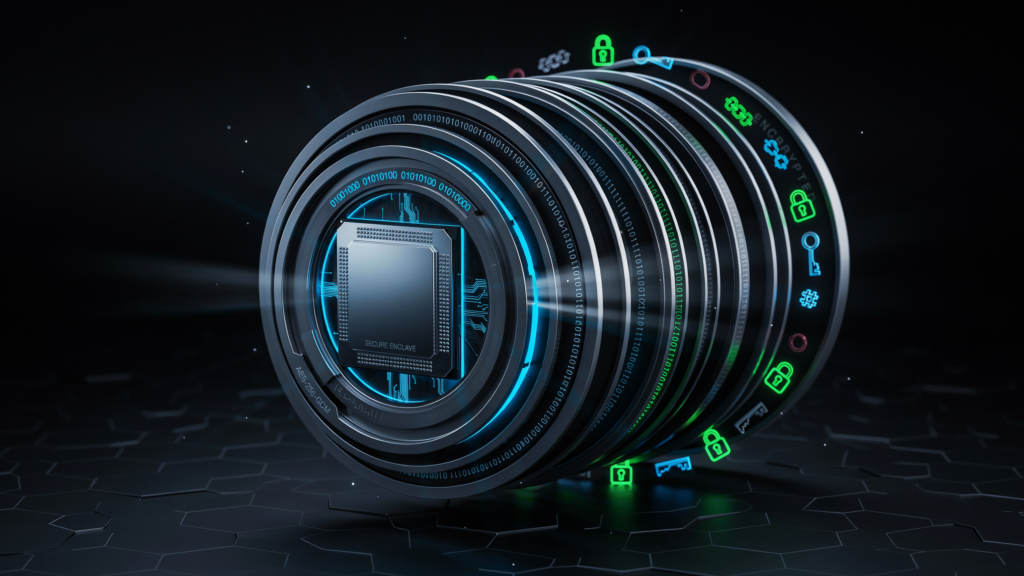
Sometimes data could be vulnerable even in Private Cloud while it is being processed in memory. Private AI solutions generally utilize the technology of confidential computing that encrypts data in use by placing sensitive information into hardware-based secure enclaves (such as Intel SGX, AMD SEV). Moreover, homomorphic encryption—and other techniques—enables the AI to conduct calculations on encrypted data, without requiring decryption at any point in the calculation process (keeping information completely unreadable for outsiders).
Private AI assailants and public AIs: In-Depth Analysis

The discrepancies between private artificial intelligence and public AI offerings extend well beyond security. The following are a few important performance and operational metrics where it is useful to compare the two paradigms:
Metric
Public AI Models
Private Artificial Intelligence
Data Privacy
Data usage for training publicly available models: Low;
Absolute — data stays completely within a secure perimeter.
Customization
Not extensive; drug-type non-TLS knowledge levels.
High; various proprietary business data models are fine-tuned.
Compliance
Difficult to audit; may violate GDPR/HIPAA.
Completely regulated with no-new data points, and maintains security and stability.
Control
Reliant on third party updates and API availability.
Code, model weights and updates are 100% your property.
Cost Structure
Pay-as-you-go (API Calls) that you can scale Maximum quickly.
Initial setup costs are High but Very predictable over time.
Public AI is like riding public transit: generally useful and cheap, gets you where going for most things, but you are at the whim of whatever route or time schedule others set up and who sits next to you. Conversely, think of a private AI system as having your own individually tailored version of an armored security vehicle behind closed doors. You decide who enters, where it goes and how you tailor its operation — precisely the way you want.
Key Benefits of Moving to Private Artificial Intelligence
The initial effort: creating a custom, localized AI framework might feel like an overkill at first look but again this is scale. The benefits for progressive enterprises range well beyond basic data protection.
Whether You Want Customization Or Niche Expertise Meets All
Public AI models are agile generalists; they know something about everything. But, whereas a law firm needs an AI that understands certain regulatory precedents and a medical research lab needs one which understands how to interpret complex genetic seq. data. Since private artificial intelligence executes in an isolated environment, organizations can customize these models to their own datasets, internal wikis and historical case studies. Essentially, it forms an AI buddy that knows the company’s own lingo and specific workflows.
Low Latency & High Reliability
Public AI APIs are mostly delayed, especially at peak hours where millions of users are querying the very same servers. When a financial institution depends on real-time fraud detection, a two-second delay can be disastrous. Essentially, companies acquire immediate responses without the time-sucking bottlenecks of public network congestion by running private AI on local hardware or dedicated cloud servers.
Long-Term Cost Predictability
While buying hardware or licensing open-source models can be prohibitively expensive, the operational costs of private systems are very constant. Public AI APIs are billed by the “token” (typically word fragments), so your costs will scale linearly with how you use them. API fees can quickly add up for enterprises processing millions of queries per day. The predictability of infrastructure costs with private deployment enables helping to budget better.
Private AI Applications Across Industries Use Cases
Although theory and specs are extremely important, the practical implementations for which this technology was designed will bring you the most value. To see how valuable this is, let us consider private artificial intelligence being used in extremely regulated fields where security and privacy are paramount.
Healthcare providers routinely handle some of the most sensitive personal data on the planet. Protecting sensitive data is of the utmost importance such as patient medical histories, diagnostic scans and genomic profiles Hospitals can maintain the confidentiality of patient data that HIPAA regulations mandate by leveraging a solution based on private artificial intelligence to fill the void — automating report summaries, conducting X-ray interpretations, and even predicting patient readmission rates, all without having to expose sensitive health records to the public internet. Likewise, large pharma uses proprietary private systems to search molecular structures for drug discovery in a multi-billion dollar research effort which is kept completely secret.
Data leakages: In investment banking and retail finance, data leakages can mean immediate bankruptcy or billion-dollar regulatory fines. AI models for credit scoring, algorithmic trading and fraud detection are customized by Financial Institutions. Banks prevent competitors from trying to reverse-engineer and duplicate their trading strategies by keeping their transaction logs and proprietary trading algorithms housed behind a secure internal network. The system sits a layer above, and lets financial analysts drag & drop sensitive M&A files for immediate summarizer upload, all stress-free.
Agencies of national security and ministries of the government deal with an enormous amount of classified intelligence on a daily basis. It is impossible to send these details to commercial public AI, even national security bans for that. Local air-gapped AI environments enable defense personnel to comb through geopolitical intelligence, translate sensitive documents and run simulated tactical simulations without fear of espionage from hostile foreign actors.
Challenges to rollout of Private Artificial Intelligence
The advantages are obvious, but the obstacles to creating and managing a private AI architecture comes with its own challenges. There is a different set of challenges faced by organizations that need to be dealt with prior to successful deployment of these architectures.
High Initial CAPEX
A private setup, on the other hand, requires massive upfront host setups unlike public AI engines where you just pay a small monthly subscription or low API usage fee. High-end graphic processing units, such as NVIDIA’s H100 or more recently announced H200 chips are needed for top end AI processing. It is very expensive to secure this hardware, and thanks to limitations within the global supply chain will take up to months. And so even putting these resources into a private cloud environment incurs some hefty hourly infrastructure costs.
In 2030, an estimated 85 million jobs could go unfilled due to a labor shortage.
Public AI Tools are meant to be used by almost anyone from a casual web browser. In contrast, an on-premise or a secure cloud-based AI system with frequent upgrades requires specific workforce skills such as machine learning engineers, MLOps specialists, data scientists and cybersecurity professionals. This is one of the major bottlenecks for enterprises today on recruiting and retaining this kind of talent.
Mo de del Ma int enan ce and Drift
Moreover, maintaining an exclusive AI system is a time-consuming task. A private model is not updated automatically as public models that are constantly improved from the same team that owns them; a private model requires your internal team to periodically update it, maintain the system, and fine-tune the results. Models can be affected by “concept drift,” the phenomenon through which trends in the real world change and therefore become less accurate over time, thus requiring continuous monitoring.
A Step Map method for Private AI Adoption
To overcome these challenges, organizations have to adopt a methodical and pragmatic implementation strategy. A systematic framework provides organizations with a clear blueprint for the seamless deployment of private artificial intelligence.
Step 1: Define Your Goals and Scope Step Start small. Instead of making a prototype for an overarching system that works at scale for your whole company, find one high-value use case (e.g. customer support agent trained on proprietary internal manuals) and explore it linearly.
Choosing the Appropriate Base Model: You never have to train an all new model from scratch. Meta’s Llama/open-source models or Mistral AI’s models are a fantastic starting point. You can download these models and execute them within the boundaries of your own network per-computed.
Define your Data Governance: Prepare and structure the data before you give it to your model. Provide different access levels to various departments so that if your HR payroll data is in the private system, customer support agents cannot see this sensitive information.
Team Up with the Right Infrastructure Providers: If you prefer not to purchase physical GPUs, team up with reputable cloud providers that have enterprise-grade confidential computing instances tailored for work-from-home models.
The Future of Secure Automation
We are leaving behind the centralized world of tech. Public cloud infrastructures at scale will always exist, but the demand for localized control is enabling a massive wave of innovation. The future of private AI is closely related to improvements in small, efficient open-source models as we have mentioned here before and you train on data up until October 2023.
Hardware capable of running a high-performing language model would have only been possible on supercomputer level hardware just a year or two ago. Today researchers are building custom-tuned models that can run on off the shelf business class servers, or even high end laptops. So these smaller models are tuned on very specific, narrow tasks and they often match or exceed their performance compared to massive public models in those areas. This makes localized deployment far easier for medium and small businesses that previously could not afford custom infrastructure.
A second big trend is bringing together private AI with edge computing devices, enabling smartphones and other types of industrial machinery or medical sensors to keep data local without connection to the Internet. This mix of secure local processing and the occasional ultra-secure cloud sync is the perfect balance of speed, convenience, and accessibility from trusted hardware.
Conclusion— The Ultimate Paradigmshifting
At this point, it’s not a debate of if machine learning must be done by organizations but how they can approach it safely. Great industry, public AI models gave us the best introduction that anyone could ask for into what machine learning can do, but they also came with their own risks which modern enterprises may be overlooking. Safeguarding customer data, intellectual property, and proprietary algorithms is integral to business continuity.
At the end of the day, you have to ask yourself A secure on-premises approach and machine learning is no longer just a trend; it has become evident that for next-generation enterprises private artificial intelligence is the gold standard. As long as they fully control their data, organizations can explore the most impactful use cases with unrivalled confidence that the most critically important digital assets they possess are under their sole possession.
Frequently Asked Questions (FAQ)
Is a private AI better than a public artificial intelligence?
In the short term, yes. This means an initial investment before the benefits can be realized, hardware (GPUs) or dedicated private cloud resources, as well as specialized talent needed to set it up. That said, public AI API costs can ramp high for companies looking to keep engine at high volume query needs. Private systems deliver steady, stable expenses along the road and reduce the threat of high-priced information breaches.
Are open-source models able to match their public counterparts?
Absolutely. An open-source model that is fine-tuned on your internal data might perform as well or better than a general-purpose public model for specific, specialized tasks (like reading medical reports, legal contract analysis, or writing proprietary code).
Is Installing servers necessary to run a AI system in Private?
No. Though some organizations like to use on-premise physical servers for maximum control, you could also run private models inside your own dedicated private cloud partition (AWS VPC or Azure Private Cloud). This allows you to have the flexibility of the cloud while ensuring that your data is separate from other users.
In less than a minute, you will be using your own private AI setup.
Open-source models can be deployed to a basic proof of concept in just weeks. On the other hand, scaling it across an enterprise-wide deployment with sound data governance, tailored training and securely exposed APIs typically takes 3-6 months, depending on the complexity of your data.