
The New Era of Verticalized, Personalized AI
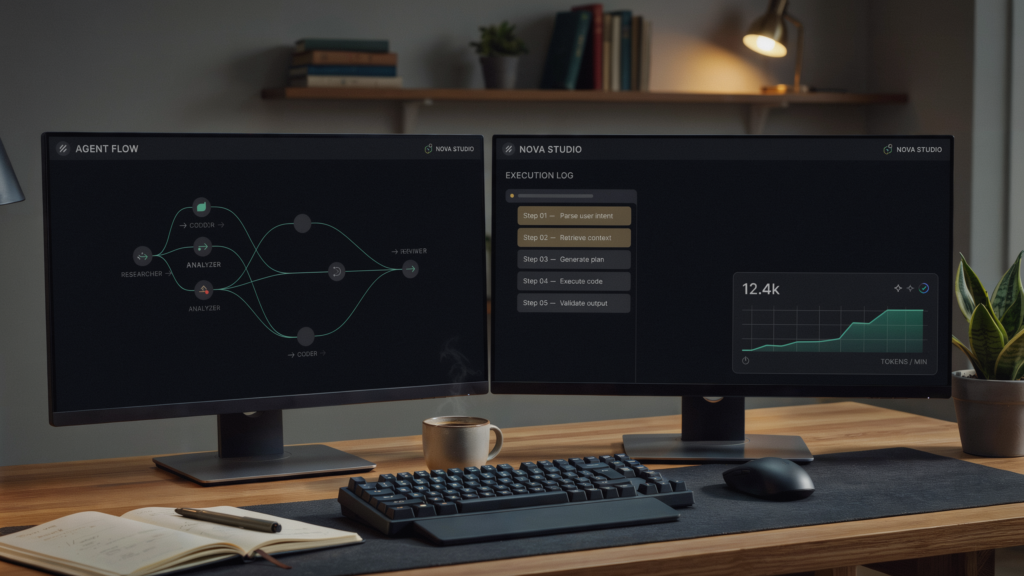
This is the generative landscape for AI–it has changed dramatically. The average Joe only interacted with AI through one giant monolithic chat window not too long ago. You asked a question and the server many miles away spat out a paragraph. This model was multi-purpose, centralized and a major breakthrough in its time, however, it’s starting to show its limitations. The range of today’s users, from independent software developers to students and neurodivergent individuals, call for tools that are private, niche and ultra-contextual.
Enter claudia artificial intelligence. This new philosophy in AI is represented by the ecosystem surrounding the name Claudia, which is focused on excellence in a narrow range of tasks, rather than being an answer engine for everything under the sun like chatbots are trying to be. A philosophy with localized control, highly specialized agentic workflows and user-first interfaces as its foundations. This new paradigm of interacting with machine learning every day is evolving and whether it is about teasing complex command-line developer tools into sleek visual dashboards, executing a distraction-free learning coach for you or becoming a local-first mobile personal assistant that is always there for your queries¿
So Claudia AI is not a Bot? The Ecosystem Decode
So for those who are looking to hear more general claudia artificial intelligence, it must begin with its most open-source popular: the standardized graphic user (GUI) and advanced developer frameworks. High-tech tools like Anthropic’s Claude Code, have been largely limited to terminal windows for a long time. As powerful as this is, the experience of controlling an AI agent via a command-line interface (CLI) can be overwhelming for non-developers and even a bit burdensome to veteran engineers accustomed to visually-lucid interfaces.
A project called Claudia (now transitioned into the open-source desktop app, which finally now goes by Opcode) solved this exact problem[1]. Developed with snappy lightweigh frameworks like Tauri 2, React and Rust it features a beautiful local-first dashboard[2]. Users no longer type cryptic terminal commands to execute multi-agent workflows, nor edit system files; they simply point, click and see their AI thinking themselves in real-time.
However, the impact of this name goes way beyond developer tools. In addition to the digital ecosystem, Claudia has also taken form as a hyper-localized, privist A.I. mobile agent[2], alongside becoming an learning sidekick[3] and a voice assistant for ADHDers.4. In all of these projects, one theme remained constant: the raw intellectual firepower of frontier language models, bound in human-readable and usable formats.
The open-source Going from zero to developer productivity
The third aspect of claudia artificial intelligence for creators, developers and product managers is really about engineering. In the past, writing code assisted by AI required a lot of messy copying and pasting from your browser to your local code editor.
That friction is eliminated completely with the Claudia GUI. The toolkit directly connects with your local workspace enabling the underlying AI agent to learn your codebase, to plan out multi-step execution paths and securely record direct edits on files on your behalf2.
Visual Session Management and Timeline:
One of the biggest risks that an AI agent has when it edits your local code is breaking something, or worse yet, taking your project in the wrong direction. This is elegantly solved on the Claudia desktop client in the form of a visual checkpoint and branching timeline[2]. That means if an agent messes up step 4 in a ten step development plan, you don’t have to manually revert hours of work. You can look at the timeline, revert to a clean commit in your codebase, and point the agent with more explicit instruction of where to go.
Transparent Cost Tracking
Since these advanced developer setups are dependent on immediate connections to the biggest foundation models, you can see prices for API usage spiral out of control. If not properly restricted, a runaway multi-agent loop can also rack up large bills. In this context claudia artificial intelligence enables a cost tracking dashboard by default2. It shows exactly how many tokens you are using each turn, how much it is costing you per session in real time, and lets you create hard budgets to avoid any unwanted surprises.
Opening the Gates of Non-Technical Builders
This might be the most exciting thing about this visual method for creating AI agents, that it makes software development accessible to many more people than just programmers. In the past, the line separating “coders” from non-coders used to be a big wall. You could not build if you did not know syntax.
At claudia artificial intelligence, users are not scared anymore from the terminal windows or raw code files[7]. Imagine an entrepreneur with a bright idea for a web application — they would launch the visual frontend, state their vision in plain English and see specialized sub-agents are spun-up automatically to configure the database, design the user interface, and check the security settings. It is traditional, collaborative interface that connects between human creativity and technical execution.
We will see that this focus on user-friendly, localized and human-centric design is not an isolated paradigm confined to software development as we embark deeper into this exploration. It goes straight into our personal lives, our mental well-being and how we learn new skills.
The On-Ground Battle: A Privacy First and Calm AI
When AI is so much a part of opening up our sacred data, oh boy have we got a battle on our hands — privacy. A growing number of internet users feel uncomfortable with the fact that their private conversations and reflections, or literally their business topics could be fed into centralized servers to train future machine learning tools. Now more than ever, we need local-first (i.e. everything works offline), end-to-end encrypted, and “calm” technology.
This movement toward sovereignty is the very reason, why deploying claudia artificial intelligence through mobile devices is irresistible. This model does not lock users in a centralized subscription where all the data about them is harvested. Instead it offers local focus. It runs memory on-device, giving users the ability to securely connect their own API keys from providers like Anthropic or Google, and taking the power away from centralisation.
Empowering Users with Full Ownership over Their Data
In addition to this principle of simplicity, the private mobile agent is based on a fundamental idea: Your data must be yours. With traditional chatbots, your conversation history gets saved in the cloud and is usually at some point accessible to those running the platform and are used for model fine-tuning purposes. With claudia artificial intelligence, your personal journals, business musings, and voice notes will never make it to a foreign server destined for training by enabling local encryption.
The ‘Bring Your Own Key’ (BYOK) Model
Using a “Bring Your Own Key” architecture, the application is used as an interface for users, not a middle man. The users generate their private API keys directly from the AI providers. The mobile client then connects directly with the secure endpoints of the model. Not only does this setup cut your subscription costs down massively, as you only pay for the exact tokens you used, but it also ensures that no third-party developer has access to a copy of your conversations.
Minimalist and Calming Interfaces
Most modern mobile apps are well-known for battling for your attention. So much so, that they will offer your flashing notifications, gamified streaks and infinite feeds to keep you addicted. An AI agent we call “calm” pursues the opposite course. Designed to be silent, minimal and focused. It has no ads, no social media integrations and also not even an attempt to monetize your not-so-attention-span. It’s already a quiet utility, sitting on your phone until you call it and otherwise invisible.
Local-First Architecture + Memory On Device
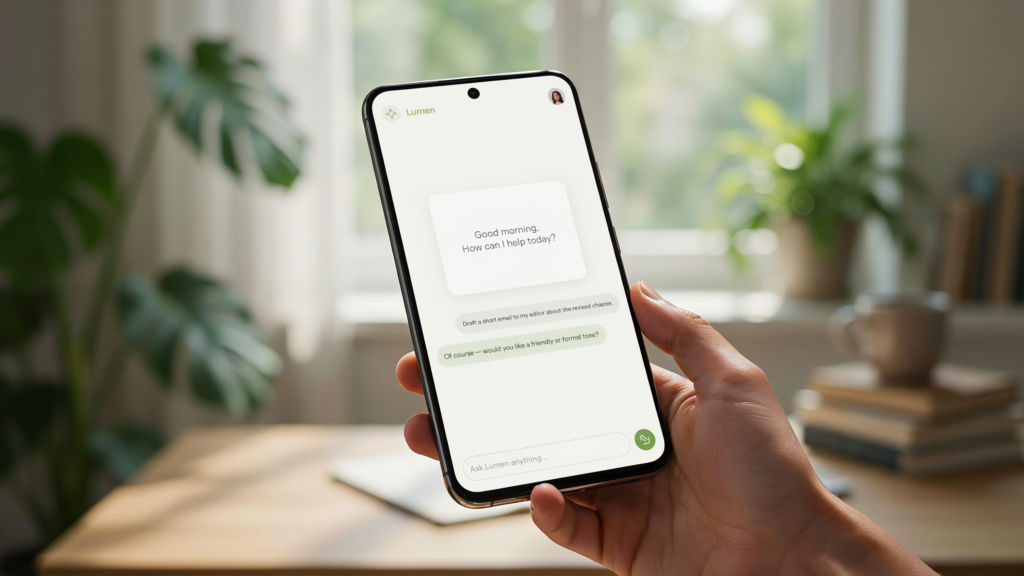
A major frustration with typical AI interfaces is that they have no longterm memory. Every time you initiate a new chat session, you have to explain to ChatGPT who you are, what do you like, and more importantly what project your working on.
Local-first paradigm σ The local-first paradigm is one of the cornerstones of claudia ai experience. With your encrypted vector database on the phone, it can remember previous interactions without violating your privacy.
Coherent Continuity: The app holds your projects, writing style and goals over weeks without even you noticing.
Zero Cloud Footprint: As this database only lives physically on your device, there is no risk of a mega leak out from the cloud exposing your life history.
Speed of Retrieval: Using Local indexing, AI has immediate access to past notes, making conversations seem unfettered and more human-like.
Embracing Neurodiversity:Your AI Partner for ADHD
Specialized AI tools are also becoming transformative specifically to the neurodivergent population in addition to general productivity. Executive dysfunction translates these tasks into monumental feats for adults living with ADHD, making even what might appear to be a simple task—planning an overbooked day, ordering a chaotic to-do list or beginning a lengthy project—feel dauntlessly tough.
Claudia artificial intelligence is a cognitive prosthetic for neurodivergent people, especially those () working with ADHD. It is a non-judgmental, highly structured soundboard squeezing messy things into orderly actions.
Voice-First Brain Dumps
With your mind racing, a tidy organized note is often simply not possible to compose. Users can just leave a chaotic, semi-structured voice note using the mobile app. You can share your day, write about what troubles you most, and change topics freely. The AI will then comb through this raw audio to get rid of the mental noise and transform the transcript into a neat little outline with a logical structure.
Gentle, Step-by-Step Task Deconstruction
Analysis paralysis: A huge struggle for people with ADHD is that they don’t know where to start on a big project. Instead of dumping a generalized to-do list on you, the app can divide one task (such as cleaning the kitchen or beginning tax preparation) like this into micro-steps. The model shows these steps one at a time, which helps to keep the user focused on what they need to do next rather than how daunting the whole thing feels. The method you trained on shows a general tendency: claudia artificial intelligence is not the brute force of numbers, it is contextual empathy.
Explore Transforming Education with Custom AI Friends
Another Fundamental Limit of the conventional education system: Scalability With thirty students present, it is unlikely that a single teacher will cater their explanation to the unique learning speed, cognitive style and personal interests of each student. This is certainly a more formidable remain aware of for adult learners and working experts as well. Most of the time, our schedules are strict enough that we simply cannot afford to push in several rigid multi-hour long courses into them. This ends up burning out students and leaving goals half baken.
This is exactly the point where claudia artificial intelligence comes of age educationally. Capitalizing on the versatility of large language models this system ushers in a shift from static, intimidating courses to dynamic conversational micro-learning. The AI adapts to you, instead of forcibly conforming you to a pre-written curriculum— serving as an ever-present, responsive learning partner that provides knowledge in small digestible pieces that are related to the context.
Acquiring Language through Minimal-Stress Conversation
The most potent and developed use case for this technology is in language acquisition. Tens of millions around the world want to learn a new language, but they have to practice them somewhere. And while traditional language apps often use repetitive matching games or translations that don’t help learners prepare for real-world conversations.
The unique aspect of claudia artificial intelligence when it comes to language training is its ability to mimic real-life low-stress conversational conversations.
Gentle, Contextual Grammar Corrections
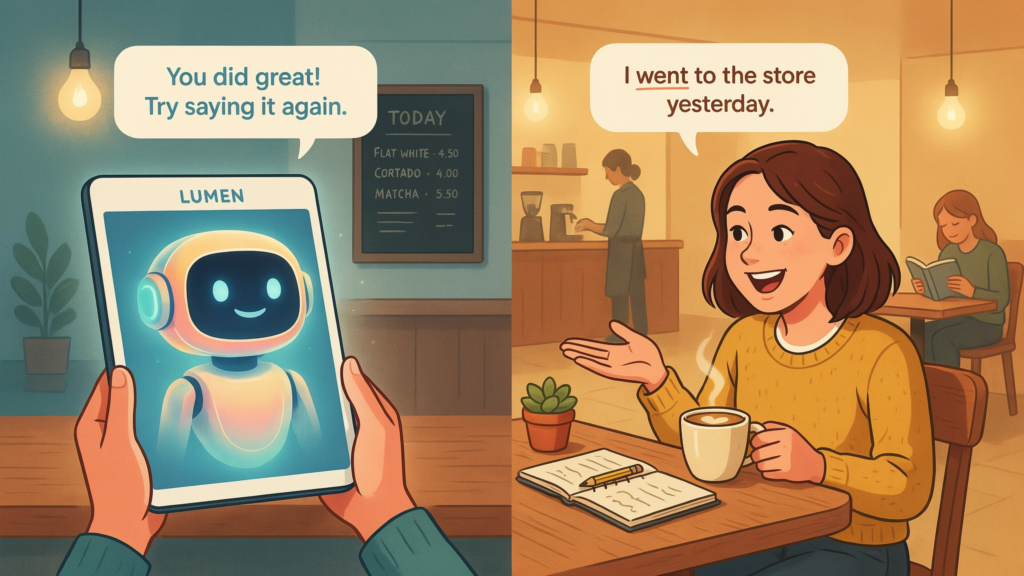
During an actual conversation, it is irritating and humiliating to have some guy interject each time you speak in order the correct your grammar. This is what the AI language companion solves by prioritising flow. You are trained to have a common conversation about your hobbies, jobs or normal life. It’s not as if the conversation stops with a red warning sign when you make a grammatical mistake. Instead, it includes the correct phrasing as part of its next reply, or drops you a friendly suggestion when the back-and-forth has ended.
Realistic Scenario Roleplay
In order to develop real confidence, learners need practice on specific areas in authentic scenarios. The conversational engine is highly versatile and role-agnostic. You can instruct it to pretend to be a barista who might have just few minutes but at a busy London coffee shop, or you may ask it to act like the hiring manager conducting technical job interview with you, while any other example could also be polite receptionist in hotel. This interactive preparation reduces the fear of the unknown, allowing claudia artificial intelligence (AI) to be a conduit from theoretical abstraction to an active application.
Micro learning: Developing geat habits that last daily

Time is not the biggest resource constraint for many people learning a new skill. Micro-learning is a method created for the present attention span. It is more about providing short, targeted learning prompts during the day instead of sitting on front of the pc with a two-hour lecture.
When combined with simple messaging frameworks (like SMS, WhatsApp or custom made mobile widgets), this approach creates an exceptional frictionless learning loop.
You are able to keep up the habit of learning every day but without feeling flustered because you are just getting very specific short check-ins on your phone. The system serves as an automated study buddy, gently reminding you to explain a concept learned yesterday or introducing only one impactful idea during that short time on your commute.
Smarter Study Techniques | Active Recall + Spaced Repetition
You cannot commit information into long-term memory just by reading it one time. Active recall (pulling out the information–i.e. forced elaborative encoding instead of re-reading) and spaced repetitions (reviewing the information after increasing amount of time) are two techniques that always work, as cognitive science has shown over and over.
Claudia artificial intelligence does all the boring work of creating flashcards automating away and managing the infrastructure of learning. It figures out what you have had a tough time with in your conversations and sends automatic follow-up questions at the precise times your brain most needs reminding.
Dynamic Questioning: Rather than repeating the same question verbatim, this uses a prompt that rephrases the question to test if you really understand the concept and not just how it is phrased.
Progressive Difficulty: Questions transition from simple recall to conceptual application as it tracks your mastery of the topic and pushes you to think more openly.
Hyper-Personalised Examples You are an architect who is learning Python — the AI will describe how to code in much more abstract terms using metaphors of architecture, thus relating this high concept programming principles directly to your existing understanding of your career.
Agentic Future+practical integration
The evolution in claudia artificial intelligence is just the tip of contemporary technology’s next bulge—proactive, agentic workflows. Artificial intelligence had been reactive for many years. It lay quietly, and waited for a prompt to respond simply. But the future is for agents that can plan, execute, review and self-correct across complex multi-step workflows.
Barriers to what personal AI can do are falling, with a trend toward standard frameworks like the Model Context Protocol (MCP), which was created to allow models to directly communicate with secure databases, development tools, and local file systems. From centralized, Corporaterepositories to a world in which Each user runs their hand-rolled swarmof tailored digital helpers and every dashboard is local-first.
Practical Advice for Users: Navigating the Challenges
Although it is certainly possible to build amazing personal intelligence systems using these components, people need to learn that they can’t expect too much from such systems, either. This is correct; no matter how beautifully dressed inside an elegant interface, large language models are not a magic wand. They remain prone to infrequent hallucinations, API latency, and limits in context windows.
In order to optimize your configuration, it is essential to remember these systems thrive more as creative partners than they do replacements for autonomy.
Use Human in the Loop: Use automated agents to rewrite your local code or analyze sensitive files, but always ensure that humans review the changes before pushing anything live. This is precisely why developers using claudia artificial intelligence must keep human in the loop at all times.
The model battleground: Manage context sizes: Similar to how we human beings get overwhelmed trying to absorb huge quantities of data at the same time. AI models deliver better when provided with clean and focused context. This way, it helps keep your active workspace clean and the agent only receives files which are relevant to the current process.
Manage Your API Overdrafts: Custom GUI clients usually run the actual API calls behind-the-scenes, so watch your consumption dashboards to avoid nasty surprises bill cycles down the line.
Frequently Asked Questions (FAQ)
Is claudia a completely free artificial intelligence?
You generally do not have to pay for the open-source parts — especially the desktop GUI clients, which can typically be found freely on GitHub. If you leverage these applications on top of foundation models, because they connect directly to the models, your bill will be for your own API calls (from Anthropic/OpenAI/Google) depending on how many tokens you consume. For light to moderate users, this usually ends up being wayyyyy more affordable than flat-rate monthly subscriptions.
How does the privacy-first model safeguard my private data?
In contrast to traditional cloud-hosted AIs that send your conversation history to an external server for model training purposes, purpose-built local clients instead keep your session histories and system memories on your actual physical device. With all data encrypted, communications are sent directly between your device and the model API endpoints that it can access securely—which makes claudia artificial intelligence an outstanding option for those who value security.
Will I need to know programming for these tools?
Not at all. Some technologies are focused on helping software engineers, whereas other integrations that include companion apps, learning systems and visual interfaces are very much for non-technical users. They have non-intimidating user interface, simple voice-to-text functionality, and interactive practice lessons need no programming experience.
So if the local agents are down there, won’t I be able to use these when I’m offline?
At present, nearly all sophisticated reasoning engines still need a live internet connection to connect with remote API endpoints in the cloud. But thanks to the underlying system design, which favors local memory with local file parsing, you can still search your chat history, organize your task lists and write prompts while entirely offline.